
In this guide 8 sections
Two suppliers can quote the same outside diameter, bore and segment count and still be pricing different blades. One may specify a different cutting rim or mounting pattern. One may include export packing and carriage to your receiving point while the other prices collection at the factory. Compare the exact blade offered, then bring both offers to the same quantity and delivery point. Only then can you tell how much of the difference is actually in the tool.
Consider a tile processor buying for a visible glazed edge. Purchasing sees two lines described as “diamond blade for ceramic tile.” Production needs to know which blade will leave an edge the customer can accept. Receiving needs a part number it can check when the cartons arrive. A good comparison sheet answers all three teams' questions and gives them a common reference when the order repeats.
Start with the cut the customer will accept
Write one sentence describing what the blade has to deliver. For example, a straight cut on a glazed porcelain strip with one exposed edge is a different purchasing requirement from a cut on the same strip that will subsequently be ground. Describe the material, thickness, cut and finishing allowance. If the exposed edge must match an approved sample, identify the sample or attach a close photograph taken in consistent light.
Give both suppliers that same description, the saw model, the current blade marking and the operating mode permitted for the job. Ask each to return the product reference it priced and any assumptions it made. A reply that changes the proposed cut, material or machine calls for a technical clarification before the buyer compares unit prices. The manufacturer's selection guidance also connects material, equipment and cutting conditions with the purchasing decision. Husqvarna blade selection guide.
What to do when both offers say “suitable for tile”
Put the actual tile series on the comparison sheet. Ask whether the quoted reference covers that series, the thickness being processed and the wet or dry conditions specified for the saw. If a supplier offers a different reference for another tile in your range, give that option its own line. Otherwise a buyer may award the lower price for one job and expect the blade to cover a second job that was never quoted.
Compare the cutting rim, then the steel core
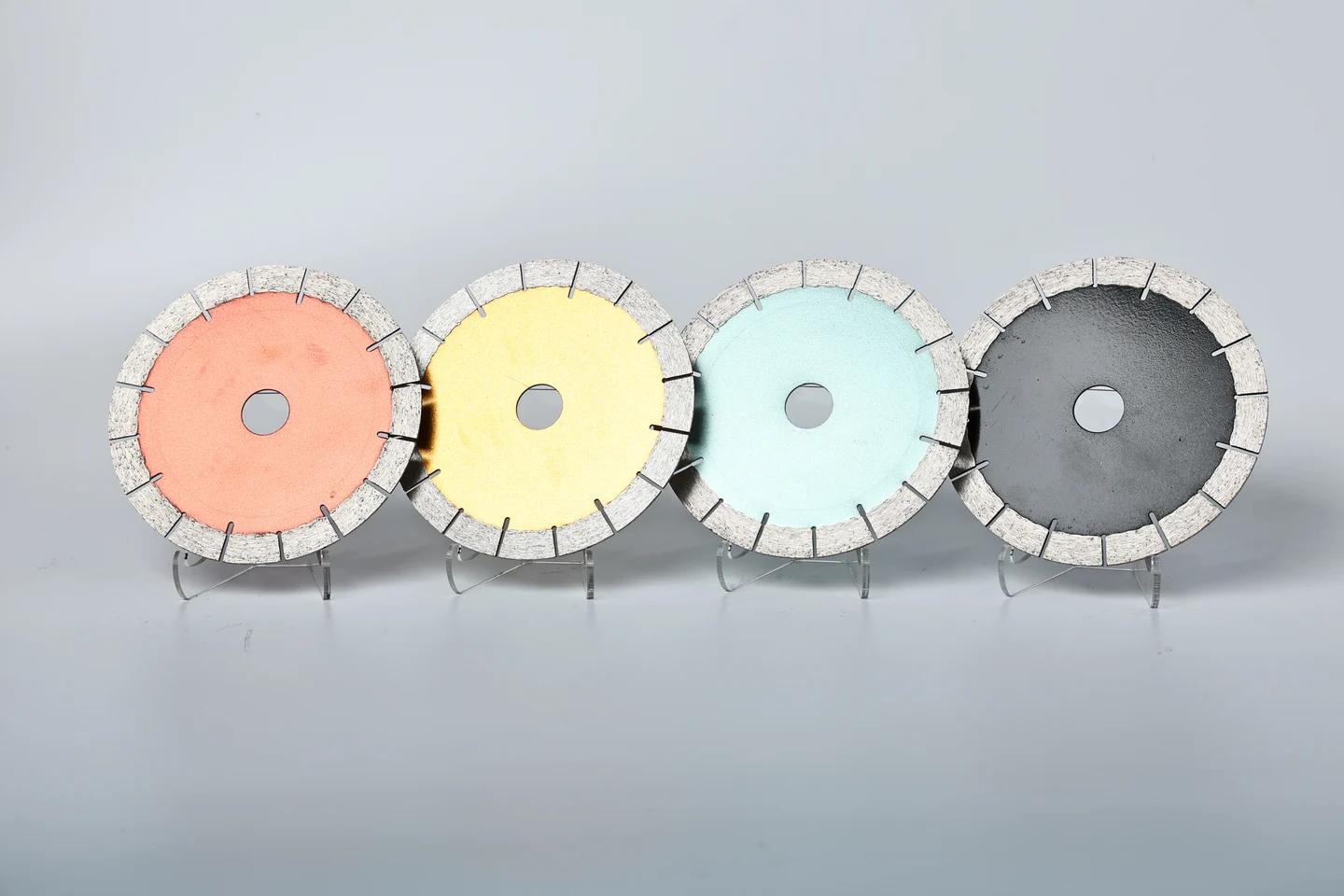
For a segmented blade, record the number of segments, their length, width and height, and the supplier's definition of the stated height. Ask which portion is the diamond-bearing working layer if that distinction matters to your purchase. A continuous rim needs its own dimensions and description. Asking for a tooth count on that design creates a blank field without telling the buyer anything about the proposed tool.
If one drawing shows a taller segment, first check that both suppliers measured from the same reference. With length, width and shape held constant, extra height increases nominal segment volume. It still leaves open the diamond-bearing depth, how the segment wears on your tile and the quantity of acceptable work it delivers. Enter the dimensional difference in the comparison sheet. Leave the service-life question for a comparable production trial.
Which formulation details should a buyer request?
Diamond grit, its distribution and the metal bond influence how the cutting face works and renews itself. A quotation can identify the intended material, operation and supplier's bond or application code without disclosing a proprietary recipe. If two suppliers use different concentration scales or grit designations, ask each to identify its convention. A percentage or a grade word on its own gives a buyer little basis for ranking the offers.
Treat descriptions such as “premium” as the start of a question. What changes in the supplied item, and which result should improve on this job? The answer might identify a different rim design or a configuration intended for a particular finish. Record the answer and agree how to evaluate it. Inferring raw-material origin, cobalt content or expected life from the selling price can lead purchasing to reject a suitable blade for the wrong reason.
Which details affect installation and acceptance?
Record core thickness separately from cutting width. Check the bore, fixing or drive holes, their positions and any drawing revision needed for the mounting interface. For installation preparation, send the machine specification and confirm that the proposed blade's permitted conditions suit the saw. Two blades that fit over the same spindle may still have different interfaces or intended duties. The product drawing gives purchasing and maintenance a common reference. Blade and machine compatibility guide.
Where the offers describe different joining methods, core constructions or noise-reduction features, ask the suppliers to identify the construction actually supplied and its approved application. A process name cannot establish that a blade is suitable for dry use. A visible slot cannot establish an acoustic rating. If a feature affects acceptance, request a drawing, product instruction or relevant inspection criterion that can be tied to that reference.
For example, “hot-pressed” may describe how the cutting segment was formed, while “laser-welded” or “high-frequency brazed” can describe how a separate segment was attached to the steel core. A supplier may accurately use two of those terms for the same blade. Give segment manufacture and segment attachment separate fields when they matter to your specification. For an integral rim, ask the supplier to identify the construction it actually offers. How hot pressing and high-frequency joining differ.
Put both quotations on the same purchasing basis
Use one column per supplier and keep its quote number, date and revision at the top. Copy the supplier's wording first. Mark a missing figure “to confirm” and send back a short list of open questions. In a numerical comparison, a blank freight or setup line entered as zero can make one offer look cheaper before anyone has agreed who pays it.
| Comparison item | Agreed basis or detail to enter | Offer A | Offer B |
|---|---|---|---|
| Quotation identity | Date, revision, currency, validity and quoted product reference | ||
| Application | Material series, thickness, straight or miter cut and visible edge requirement | ||
| Machine and mode | Saw model, permitted operating mode and reference to the machine specification | ||
| Mounting | Outside diameter, bore, fixing or drive holes and drawing revision | ||
| Cutting rim | Continuous or segmented, rim width, height and stated working layer | ||
| Core and construction | Core thickness, stated joining method where applicable and requested features | ||
| Order basis | Number of blades of this reference per release and applicable price tier | ||
| Unit and extended price | Price per blade and goods value for the confirmed quantity | ||
| Preparation | Description, amount and charging basis for each one-time or recurring item | ||
| Packing | Protection, units per carton and whether the price includes the agreed packing | ||
| Delivery | Delivery rule, named place, edition and covered transport legs | ||
| Other charges | Buyer-paid freight, agreed insurance or handling and relevant duties or taxes | ||
| Comparable total | Cost to the agreed point, currency and amount per blade | ||
| Decision | Open items, responsible person, sample reference and quotation revision accepted |
Compare the options Tap to expand
Quotation identity
- Agreed basis or detail to enter
- Date, revision, currency, validity and quoted product reference
- Offer A
- Offer B
Application
- Agreed basis or detail to enter
- Material series, thickness, straight or miter cut and visible edge requirement
- Offer A
- Offer B
Machine and mode
- Agreed basis or detail to enter
- Saw model, permitted operating mode and reference to the machine specification
- Offer A
- Offer B
Mounting
- Agreed basis or detail to enter
- Outside diameter, bore, fixing or drive holes and drawing revision
- Offer A
- Offer B
Cutting rim
- Agreed basis or detail to enter
- Continuous or segmented, rim width, height and stated working layer
- Offer A
- Offer B
Core and construction
- Agreed basis or detail to enter
- Core thickness, stated joining method where applicable and requested features
- Offer A
- Offer B
Order basis
- Agreed basis or detail to enter
- Number of blades of this reference per release and applicable price tier
- Offer A
- Offer B
Unit and extended price
- Agreed basis or detail to enter
- Price per blade and goods value for the confirmed quantity
- Offer A
- Offer B
Preparation
- Agreed basis or detail to enter
- Description, amount and charging basis for each one-time or recurring item
- Offer A
- Offer B
Packing
- Agreed basis or detail to enter
- Protection, units per carton and whether the price includes the agreed packing
- Offer A
- Offer B
Delivery
- Agreed basis or detail to enter
- Delivery rule, named place, edition and covered transport legs
- Offer A
- Offer B
Other charges
- Agreed basis or detail to enter
- Buyer-paid freight, agreed insurance or handling and relevant duties or taxes
- Offer A
- Offer B
Comparable total
- Agreed basis or detail to enter
- Cost to the agreed point, currency and amount per blade
- Offer A
- Offer B
Decision
- Agreed basis or detail to enter
- Open items, responsible person, sample reference and quotation revision accepted
- Offer A
- Offer B
Fix the quantity, currency and delivery point
Ask for the unit price at the quantity you actually expect to release. A sample, a single production order and an annual forecast can carry different assumptions. Check whether a quoted tier applies to one blade reference, a mixed shipment or cumulative purchases. If cartons must be ordered in multiples, record the actual orderable quantity. Compare the financial commitment as well as the figure printed beside “each.”
For an international order, record the currency, quotation validity, delivery rule, named place and which charges are already included. A freight figure to a port and a delivered figure to your plant describe different destinations. Ask your logistics team for the missing leg and keep estimates clearly identified. The International Chamber of Commerce explains how the Incoterms® rules allocate delivery tasks, costs and risks between seller and buyer. ICC overview of Incoterms® rules.
Separate a repeat charge from a one-time charge
An alternative bore pattern, label setup or special packing request may change the quoted scope. Confirm availability, then ask whether the charge applies per blade, per carton, per shipment or only on the first order. State whether artwork and packing instructions are already approved. A first-order total can give a misleading picture of repeat purchasing if the buyer allocates the same setup fee to every subsequent shipment.
One practical calculation is the comparable cost per blade at the agreed point. Add the quoted goods value, applicable setup and packing charges, and the buyer-paid costs needed to reach that point. Count each item once and divide by the confirmed number of blades. For tax and duty lines, have purchasing or finance identify the amounts relevant to its chosen cost basis. Use one currency and record the exchange-rate date if conversion is necessary.
Work through a typical discrepancy
Imagine that Offer A gives a unit price for a standard bore, standard cartons and factory collection. Offer B lists the fixing holes on your drawing, protective packing and carriage to your nominated warehouse. Both headings identify a blade of the same diameter. The difference in the totals could include the product, packing and transport. There is no way to allocate it among those items from the headings alone.
First ask A to confirm the mounting pattern and price the same order quantity. Then ask B to identify the packing and freight included and where delivery ends. Obtain a comparable carriage estimate for A if the supplier will only quote collection. Keep both original offers. Enter the clarifications alongside their dates so a colleague can reconstruct how you arrived at the comparison without relying on an email conversation from memory.
Suppose the landed figures now look close, but only one supplier has confirmed the edge requirement. That is an open technical question with a commercial consequence. If the finished edge requires extra grinding, your plant absorbs that work even when the invoice price looks attractive. Ask for the missing application confirmation or a trial against the agreed edge sample, and flag the pending decision on the purchasing sheet.
Use a blade trial to answer the remaining question
A factory testing video may show a blade making a cut. For a purchase decision, ask which blade reference was used, what material and thickness were cut, which machine and operating mode were used, and what the camera shows after the cut. A close view of the entry, middle and exit is particularly useful when a finished edge will remain exposed. A demonstration on another material can leave your own acceptance question open.
For a sample trial on your line, agree what will count as an accepted piece before either blade goes on the saw. Keep the material batch, operation and inspection method comparable. Record accepted edge length, pieces needing extra finishing, rejects and any change of conditions. If the sample remains usable when the trial ends, record that fact. The observed output supports a decision about that trial. A full-life cost comparison needs a defined end point. Guide to blade life and cost per accepted cut.
A distributor may have to decide before the end of a full trial. In that case, state which evidence supports the first order and which question remains for a repeat order. A sample can confirm that the mounting does fit and a particular edge meets the agreed criterion. Keeping those findings separate from a forecast of future wear makes the decision easier to explain to the distributor's customer.
Carry the comparison into shipment inspection
Once the offer is accepted, copy the agreed reference, drawing revision, quantity, packing description and identifying marks onto the purchase order. If a sample was approved, keep its reference with the order. Receiving staff can then check the goods against the same description purchasing used. A line that only says “diamond blade as discussed” leaves the receiving team with no practical way to distinguish similar-looking items.
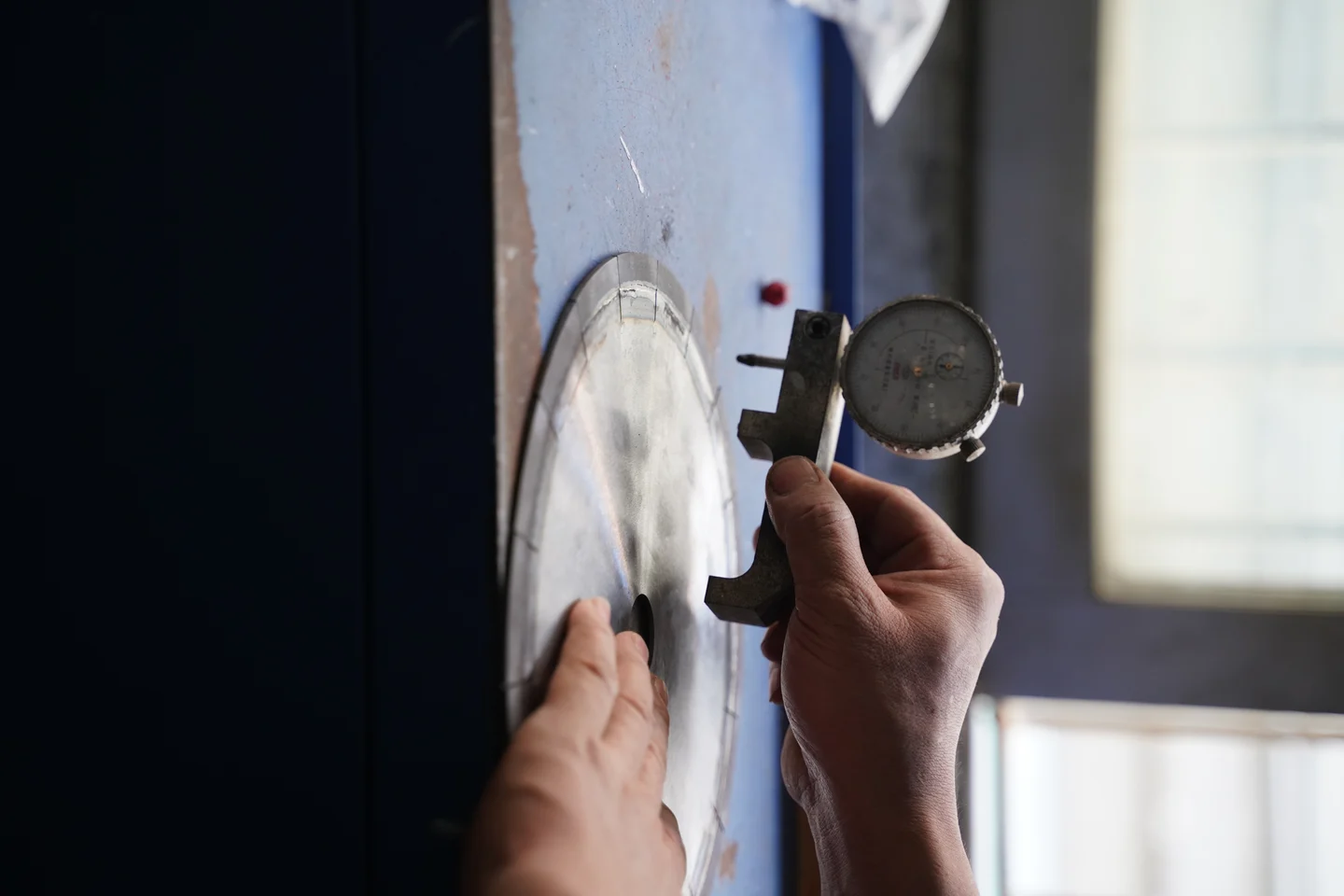
At shipment inspection, check that the carton labels and product markings point to the ordered reference. Compare the relevant dimensions and quantity with the purchase order and record the outcome of the agreed checks. If a shipment contains more than one variant, keep its cartons identifiable through receiving and storage. A discrepancy is easier to resolve before similar blades reach the same machine. RFQ and supplier inspection checklist.
Frequently asked questions
What information do I need to request a diamond saw blade price?
Give the supplier your material, thickness, machine model, operation, required edge, blade size or drawing, quantity and delivery point. A photograph of the current marking helps identify the reference. State which dimensions or fit details still need confirmation.
Does a taller segment justify paying more?
It gives you a dimensional difference to investigate. Ask how height was measured and what portion is usable on the proposed design. Evaluate the difference against accepted output on your material before treating it as a service-life advantage.
Can I compare a sample quote with a bulk quote?
Use the sample price to budget the trial. Ask for a separate production quotation at the intended release quantity and delivery basis. Identify any setup, sample freight or packaging cost that applies only to that first transaction.
How should I handle a supplier's confidential bond formulation?
Request an identifiable product code, intended material and operating mode, together with a sample acceptance method. Those items let you discuss fit, performance and repeat supply while the manufacturer retains its recipe.
What if freight is included in only one offer?
Define the same delivery point for both offers. Identify which legs and charges the inclusive offer covers and obtain the missing charges for the other. Keep estimated freight separate from amounts a supplier or carrier has confirmed.
Which records are most useful when reordering?
Keep the accepted quote revision, product and sample references, drawing, inspection criteria and any approved changes. Check that the material, machine and edge requirement still match when issuing the next order. If one has changed, ask the supplier to review the affected item.
Make the purchase decision easy to repeat
A buyer should be able to explain the award in one paragraph. Identify the blade and its approved job, the quantity and delivery point used for comparison, and the trial or inspection evidence supporting the choice. Record any outstanding condition alongside the decision. That short record gives the next buyer a better starting point than a folder containing two old prices.