
Tile bodies and surface finishes can require different cutting approaches.
APPLICATION SOLUTION · CERAMIC
Ceramic Tile Cutting
Choose a ceramic blade by tile body, surface finish and machine size. Compare segmented, continuous-rim and HF welded options, then confirm whether the cut remains visible or continues into edge finishing.
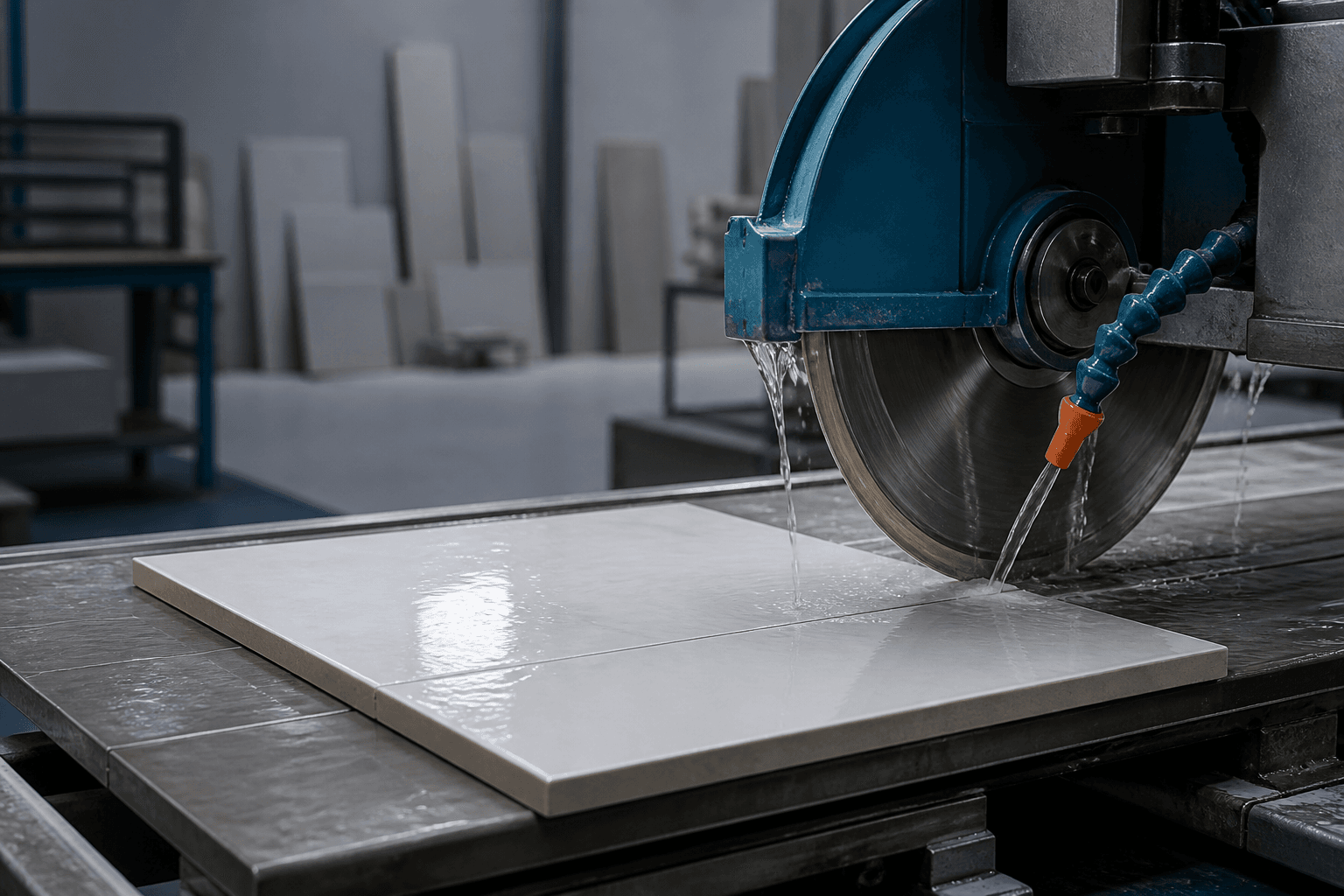
Material scope
Polished tilesGlazed tilesAntique tilesVitrified glazed tilesInterior wall ceramic tiles
Processing focus
Straight cuttingProduction cuttingEdge preparation
Equipment context
Table-type ceramic cutterBridge cutting machine
BUYER CONTEXT
Start with the tile
and finished cut.
A useful ceramic tile enquiry identifies the tile type, the cut the buyer needs and the machine doing the work. That keeps the selection focused on the actual job, rather than on a blade name alone.
Blade size and the machine interface need to be discussed together.
A production request is clearer when the required cut and tile type are both specified.
PROCESSING ROUTE
Build the selection
around the actual job.
- 01
Identify the ceramic material
Separate the tile type and finish before choosing a saw-blade series.
- 02
Match the machine route
Use the cutter or bridge-machine information to narrow the suitable series conversation.
- 03
Review the blade series
Compare applications and available dimensions on the product page.
RECOMMENDED TOOL ROUTE
Tool stages for
this processing job.
Start from the stage you need to complete. The linked product series lets you review the available configurations once the material and machine are confirmed.
What to compare before choosing
| Product series | Selection considerations |
|---|---|
| Segmented Ceramic Saw Blades | Start with the tile and machine size. This segmented series covers 120–180 mm; the continuous series covers 200–400 mm. Compare the complete size and intended cutting method before choosing. |
| Continuous Ceramic Saw Blades | Consider this continuous-rim series for wet cutting vitrified glazed, interior wall and glazed wall tiles. Confirm the tile body, visible-edge requirement and machine fit before selecting the diameter. |
| HF Welded Ceramic Saw Blades | Compare this 190–400 mm series for table-type and bridge cutting machines. Match the tile, cut and mounting dimensions; the welding method alone does not determine edge quality or dry-use suitability. |
Segmented Ceramic Saw Blades
Start with the tile and machine size. This segmented series covers 120–180 mm; the continuous series covers 200–400 mm. Compare the complete size and intended cutting method before choosing.
View specificationsContinuous Ceramic Saw Blades
Consider this continuous-rim series for wet cutting vitrified glazed, interior wall and glazed wall tiles. Confirm the tile body, visible-edge requirement and machine fit before selecting the diameter.
View specificationsHF Welded Ceramic Saw Blades
Compare this 190–400 mm series for table-type and bridge cutting machines. Match the tile, cut and mounting dimensions; the welding method alone does not determine edge quality or dry-use suitability.
View specifications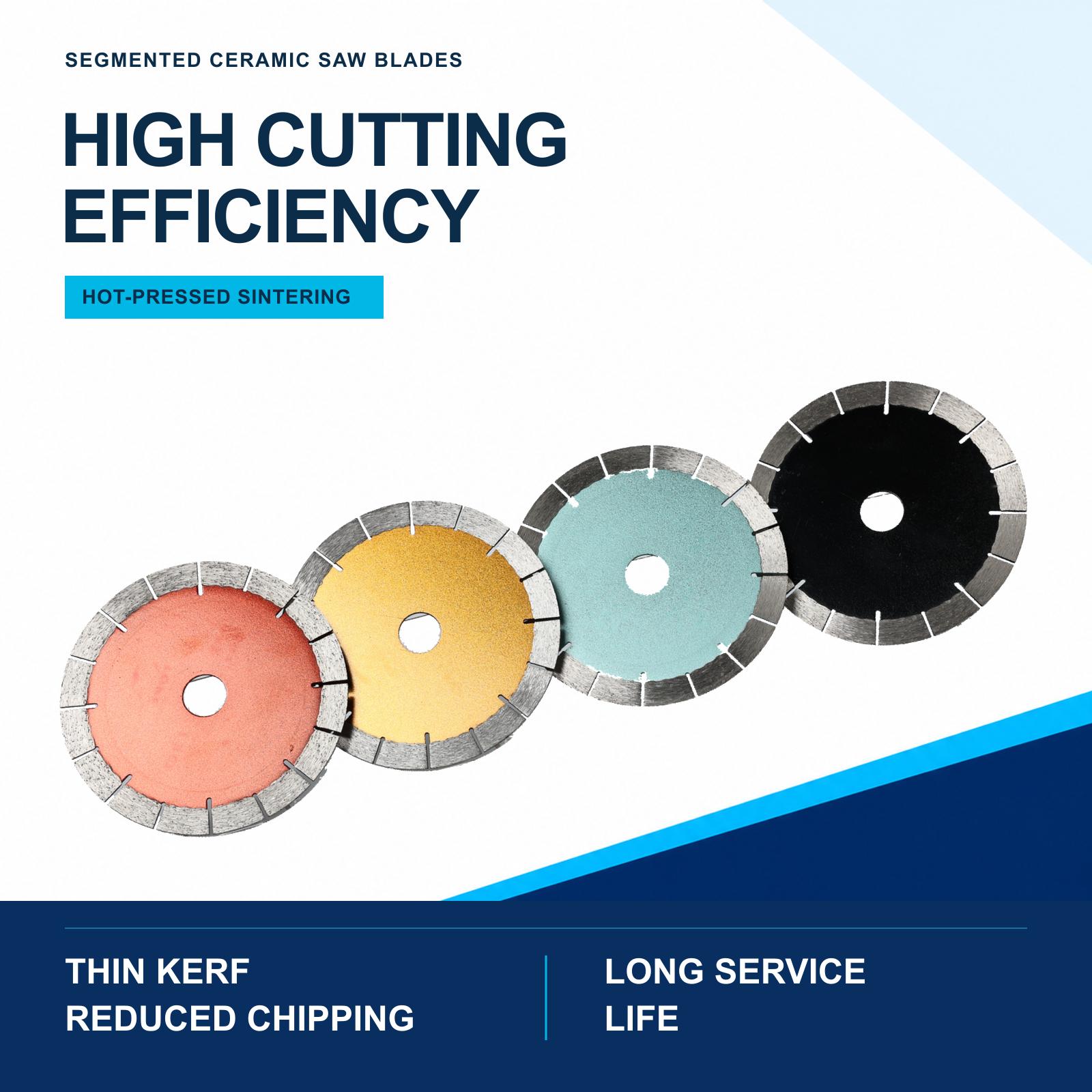
Ceramic cutting route
Segmented Ceramic Saw Blades
Segmented blades for polished, glazed and antique tiles and microcrystalline stone.
View product series ↗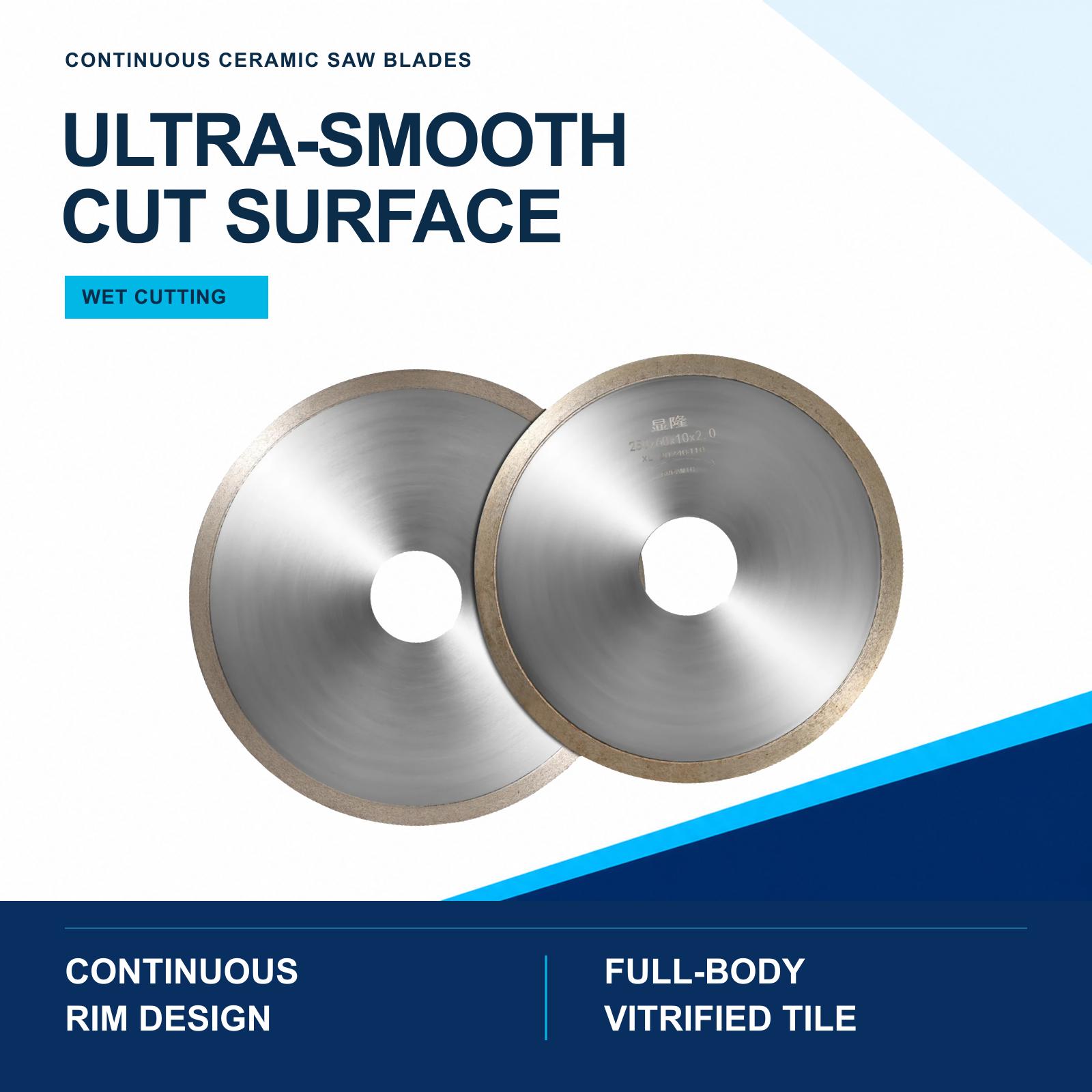
Continuous-rim route
Continuous Ceramic Saw Blades
Continuous-rim blades for vitrified, wall and glazed ceramic tiles.
View product series ↗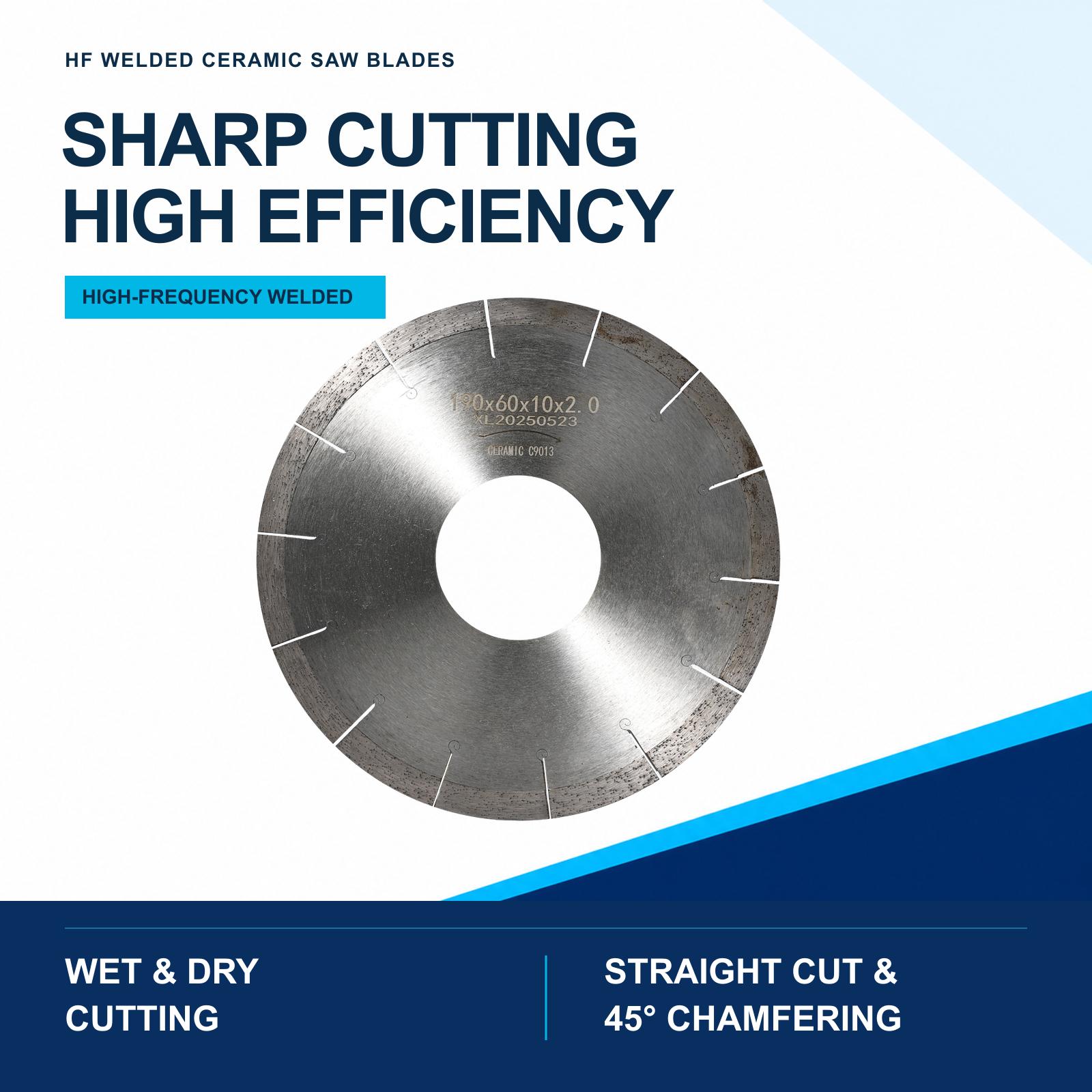
Table and bridge route
HF Welded Ceramic Saw Blades
HF welded ceramic blades for table-type and bridge cutting machines.
View product series ↗SELECTION LOGIC
Confirm the project
before the quote.
Tile type
Identify the tile type and finish: polished, glazed, antique, vitrified or wall tile.
Cutting equipment
State whether the operation uses a table-type ceramic cutter or bridge cutting machine.
Required cut
Clarify whether the task is a routine straight cut, trimming step or part of an edge-processing route.
Configuration discussion
Bring the machine and production requirement to the relevant product page instead of selecting from a generic blade name.
CUSTOM & OEM PROJECTS
Custom & OEM
support.
Custom and OEM requests can be reviewed around your material, processing operation, machine and project-specific requirements.
01Tile material or finish
02Machine type
03Required cutting operation
04Any custom or OEM requirement to review
APPLICATION FAQ
Buyer FAQs,
answered.
- 01Which details help match a ceramic tile cutting blade to the job?
- Share the tile body or surface, the required cut and the cutting machine. If the cut will become a visible edge or feed a later edge process, include that requirement as well.
- 02When should wet or dry cutting be discussed?
- Include the actual operating setup whenever it affects the job. Together with the tile type, machine and cut requirement, it gives a clearer basis for reviewing a suitable series.