
Quartz and microcrystalline materials should not be grouped without naming the workpiece.
APPLICATION SOLUTION · QUARTZ STONE
Quartz & Microcrystalline Stone Cutting
Identify whether the slab is quartz or nano / microcrystalline stone before choosing a series. Match its composition, thickness and required cut with the blade configuration and machine setup.

Material scope
Quartz stoneArtificial boardsMicrocrystalline stoneNano stone
Processing focus
Straight cuttingBeveling
Equipment context
Hand-operated cutting machineTable-type cutting machineInfrared / bridge cutting machine
BUYER CONTEXT
Name the stone
then define the cut.
Start with the actual workpiece, then describe whether the job requires a straight cut or bevel and which machine will carry out the work. This creates a practical basis for a custom or OEM discussion.
Straight cutting and beveling create different selection conversations.
The available machine may be hand-operated, table-type or bridge-based.
PROCESSING ROUTE
Build the selection
around the actual job.
- 01
Name the stone material
Use the actual material name as the first decision point.
- 02
State the operation
Separate straight cutting from beveling before moving to a product series.
- 03
Select the product route
Review the relevant Quartz Saw Blades or Nano Stone Saw Blades series with the equipment context.
RECOMMENDED TOOL ROUTE
Tool stages for
this processing job.
Start from the stage you need to complete. The linked product series lets you review the available configurations once the material and machine are confirmed.
What to compare before choosing
| Product series | Selection considerations |
|---|---|
| Quartz Saw Blades | Choose by the actual slab composition, not its colour or trade name. The quartz series addresses quartz stone and artificial boards; identify nano or microcrystalline material separately before comparing blades. |
| Nano Stone Saw Blades | Start with the 350 mm nano stone configuration and identify the actual microcrystalline slab. Confirm the mounting bore, fixing holes and cutting conditions instead of treating a quartz blade as an automatic substitute. |
Quartz Saw Blades
Choose by the actual slab composition, not its colour or trade name. The quartz series addresses quartz stone and artificial boards; identify nano or microcrystalline material separately before comparing blades.
View specificationsNano Stone Saw Blades
Start with the 350 mm nano stone configuration and identify the actual microcrystalline slab. Confirm the mounting bore, fixing holes and cutting conditions instead of treating a quartz blade as an automatic substitute.
View specifications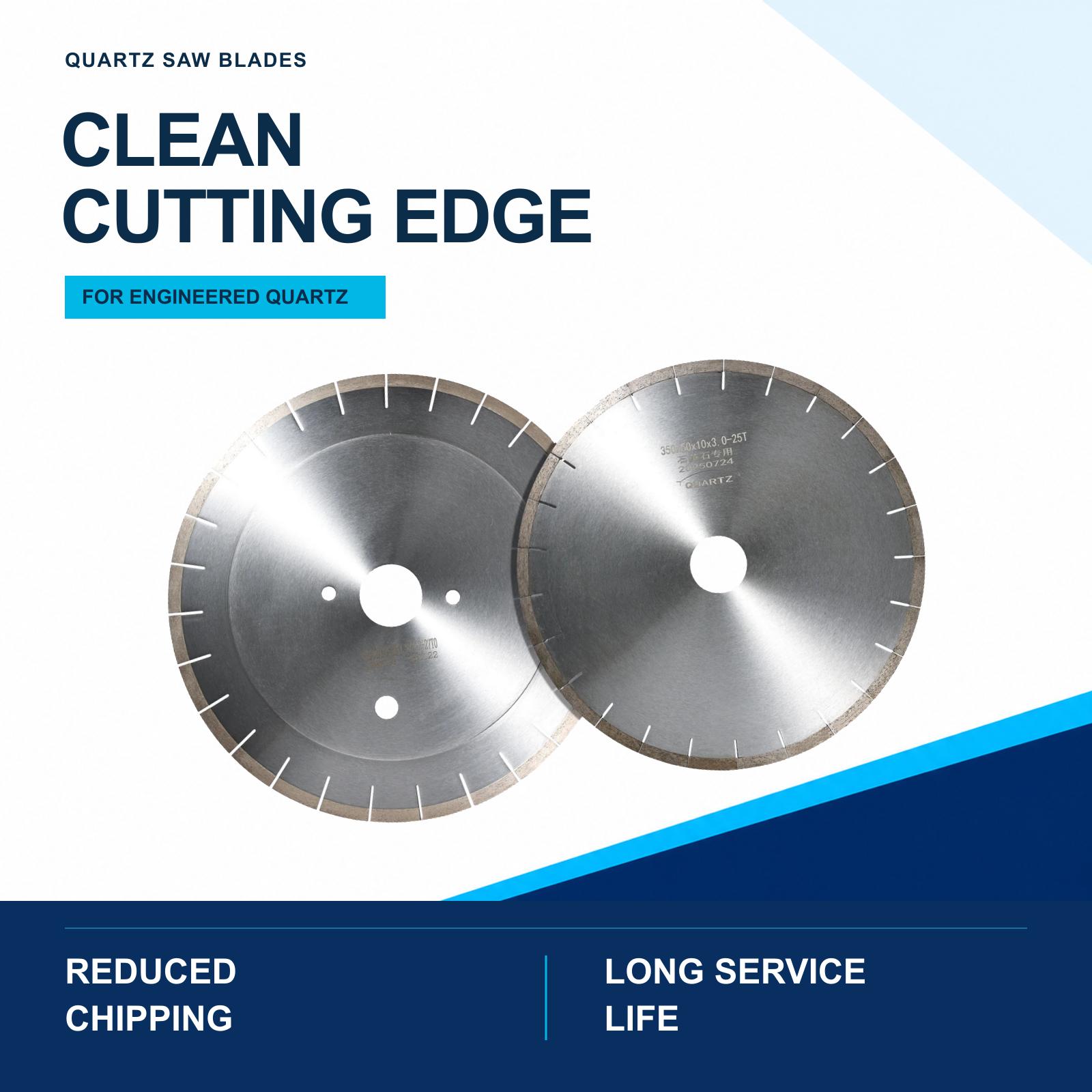
Quartz and artificial-board route
Quartz Saw Blades
Quartz saw blades for straight cutting and beveling quartz stone and artificial boards.
View product series ↗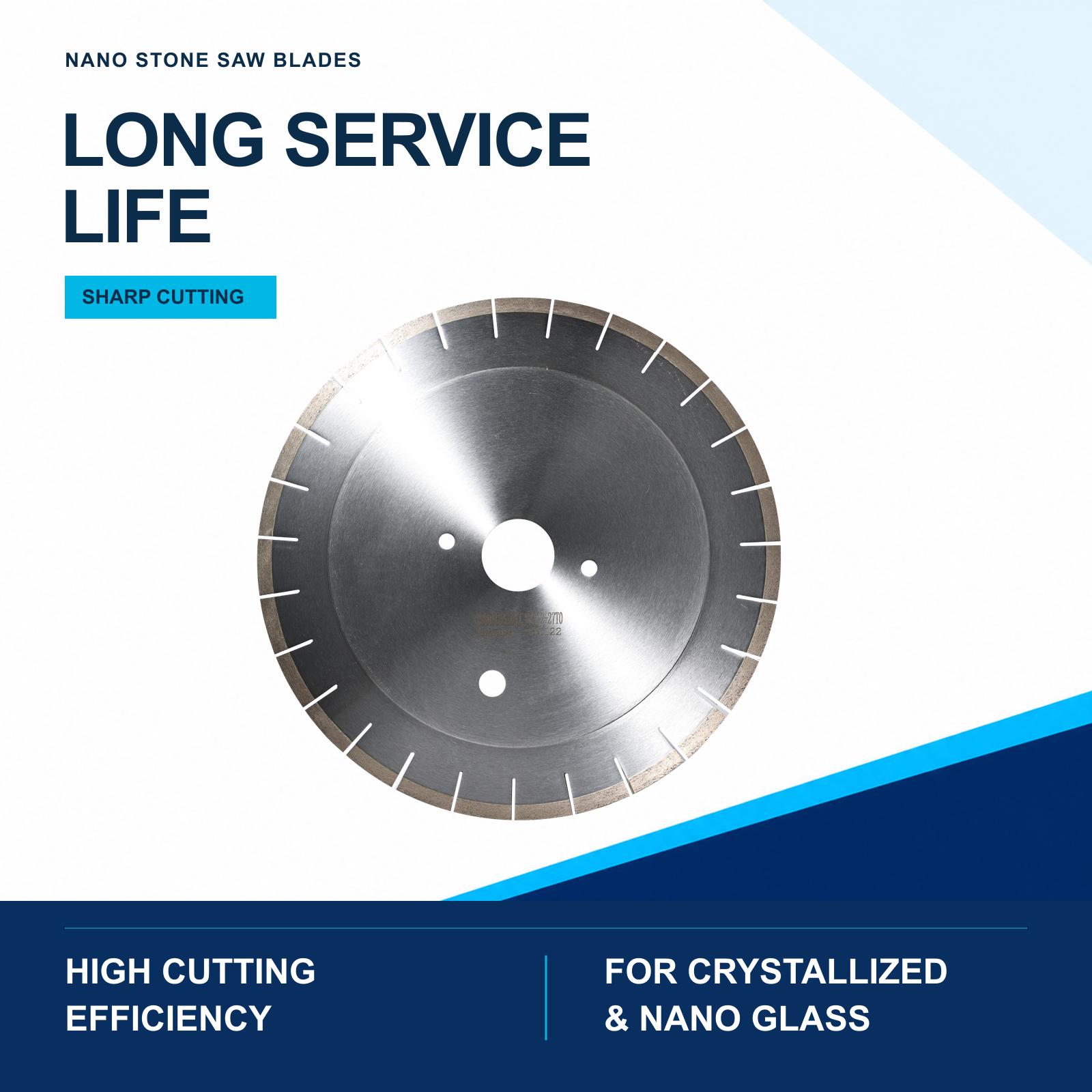
Microcrystalline stone route
Nano Stone Saw Blades
Nano stone saw blades for nano stone and quartz / microcrystalline stone processing.
View product series ↗SELECTION LOGIC
Confirm the project
before the quote.
Workpiece material
Identify the workpiece: quartz stone, artificial board, microcrystalline stone or nano stone.
Cutting task
Clarify whether the application is a straight cut or beveling operation.
Machine route
Include hand-operated, table-type or infrared / bridge cutting equipment.
Custom requirement
For OEM or custom discussion, keep the material and actual processing task together with the equipment information.
CUSTOM & OEM PROJECTS
Custom & OEM
support.
Custom and OEM requests can be reviewed around your material, processing operation, machine and project-specific requirements.
01Exact stone material name
02Straight cut or bevel operation
03Machine type
04Any custom or OEM requirement
APPLICATION FAQ
Buyer FAQs,
answered.
- 01Why should quartz and microcrystalline stone be named separately?
- They use different blade series. Identify the actual workpiece so we can match the blade to the material.
- 02What is the best starting brief for a quartz cutting enquiry?
- Provide the material, straight-cut or bevel operation and the cutting-machine type. Add any custom or OEM requirement so it can be considered with the actual job.