
In this guide 8 sections
Choose for the slab, then check the saw
Choose a bridge-saw blade by the actual slab material, required cut and machine specification. Marble, engineered quartz and granite can need different blades even when they fit the same saw. Start with a material-specific series, confirm the complete size and operating requirements, then compare the edge on a sample from the job.
One bridge saw. Several different cutting jobs.

01Start with the machine
Identify the saw model, spindle, flange and permitted blade diameter before comparing stone-specific blades.
02Define the finished edge
An exposed edge, a rough blank and a miter joint ask different things of the blade and the supporting setup.
Compare the three material families
The material name is the first filter. Thickness, reinforcement, surface and the finished edge help narrow the configuration within that family.
| Material | What to tell the supplier | Blade options to review | What to inspect in a sample cut |
|---|---|---|---|
| Marble | Natural, artificial or composite; veins, backing and thickness | Continuous marble: 150–300 mm; segmented marble: 250–400 mm | Breakout around veins, visible-face chips and exit condition |
| Engineered quartz | Slab manufacturer, product name, thickness and backing | Quartz series: 300 / 350 / 400 mm | Edge chips, stable cutting and the finished joint where required |
| Granite or quartzite | Exact stone name, thickness and current cutting difficulty | Granite series: 300 / 350 / 400 / 450 / 500 / 600 mm | Straightness, edge condition and subsequent finishing work |
Compare the options Tap to expand
Marble
- What to tell the supplier
- Natural, artificial or composite; veins, backing and thickness
- Blade options to review
- Continuous marble: 150–300 mm; segmented marble: 250–400 mm
- What to inspect in a sample cut
- Breakout around veins, visible-face chips and exit condition
Engineered quartz
- What to tell the supplier
- Slab manufacturer, product name, thickness and backing
- Blade options to review
- Quartz series: 300 / 350 / 400 mm
- What to inspect in a sample cut
- Edge chips, stable cutting and the finished joint where required
Granite or quartzite
- What to tell the supplier
- Exact stone name, thickness and current cutting difficulty
- Blade options to review
- Granite series: 300 / 350 / 400 / 450 / 500 / 600 mm
- What to inspect in a sample cut
- Straightness, edge condition and subsequent finishing work
These are diameter options within the product families. Review the height and thickness paired with each diameter, then confirm the bore and saw limits. Identify natural quartzite separately from engineered quartz, and microcrystalline stone separately from both.
Decide what the edge has to do
A rough blank that will be processed again has a different acceptance point from an exposed countertop edge. For a waterfall joint, include the miter angle and finished joint requirement in the enquiry. Keep those jobs separate when approving a blade.
Straight cuts and miter cuts need separate checks
01Straight cutting
Check the visible face, edge line and exit. Support the slab and offcut throughout the pass.
0245° miter
Inspect the thin edge and joint fit. Confirm the blade, support and cutting method for angled work.
Marble with a weak vein may break even when the surrounding cut is satisfactory. Photograph the slab before cutting and inspect the damaged area against that record. On quartz and granite, compare entry, middle and exit instead of choosing only the best-looking part of the cut.
Check diameter, mounting and operating mode
Use the machine nameplate and manual to confirm the blade range, spindle, flange arrangement, clearance, speed and cooling system. Available cutting depth depends on the saw geometry as well as blade diameter. Husqvarna’s blade-selection guide treats material, equipment and cutting depth as separate selection questions.
A blade must be approved for the intended wet or dry method. For silica-containing stone, arrange dust controls appropriate to the material and task; NIOSH describes wet methods and local exhaust ventilation as engineering controls. Follow the slab and equipment instructions for the actual operation.
Review the corresponding blade series
Use the marble, quartz and granite pages below to compare complete size combinations. If the factory cuts all three materials, send one requirement for each main job so the quotation identifies where each blade will be used.
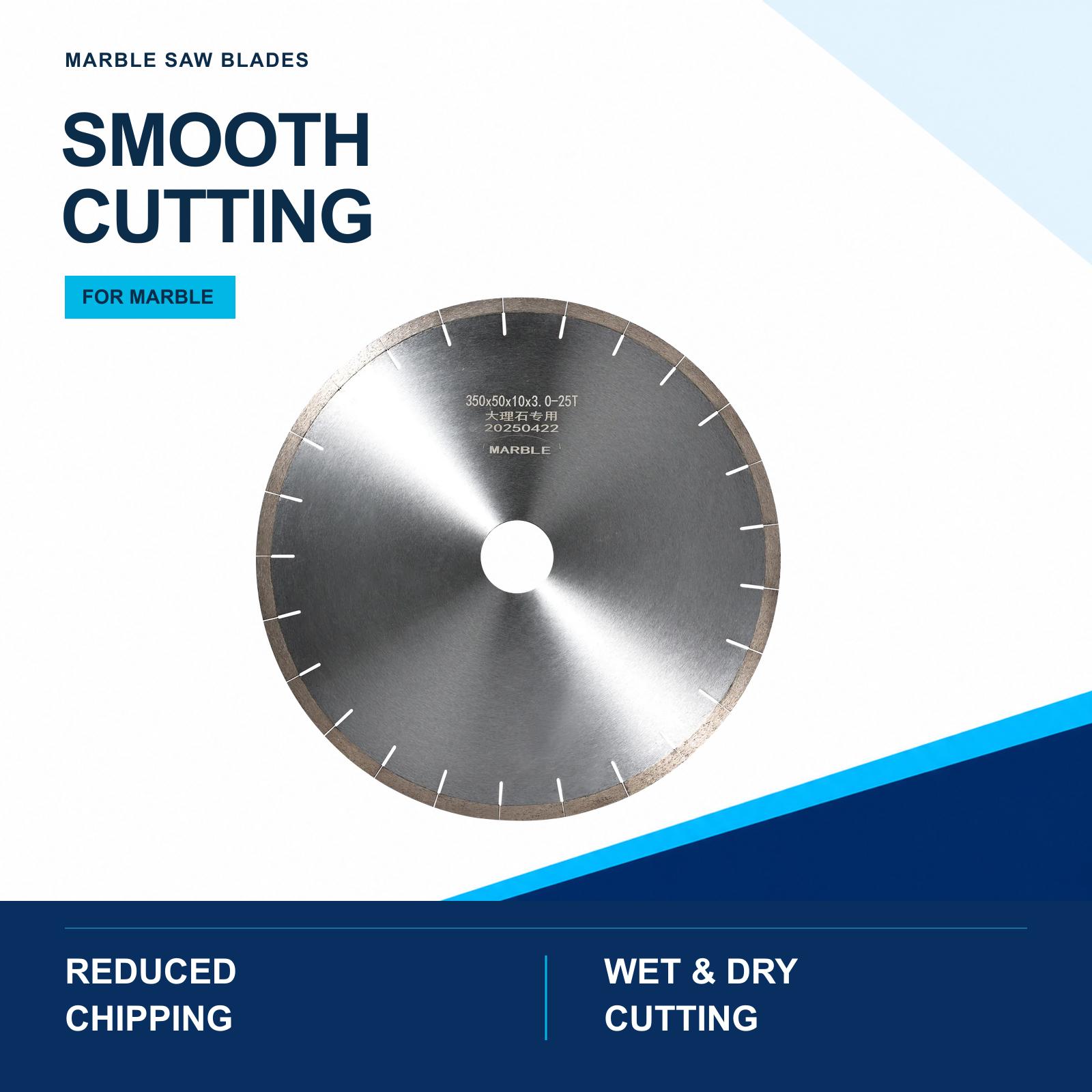
Marble Saw Blades
Compare continuous and segmented options by the diameter and cutting-section combination your machine requires. Identify natural, engineered or composite marble, then specify cutting, trimming, beveling or grooving.
View specifications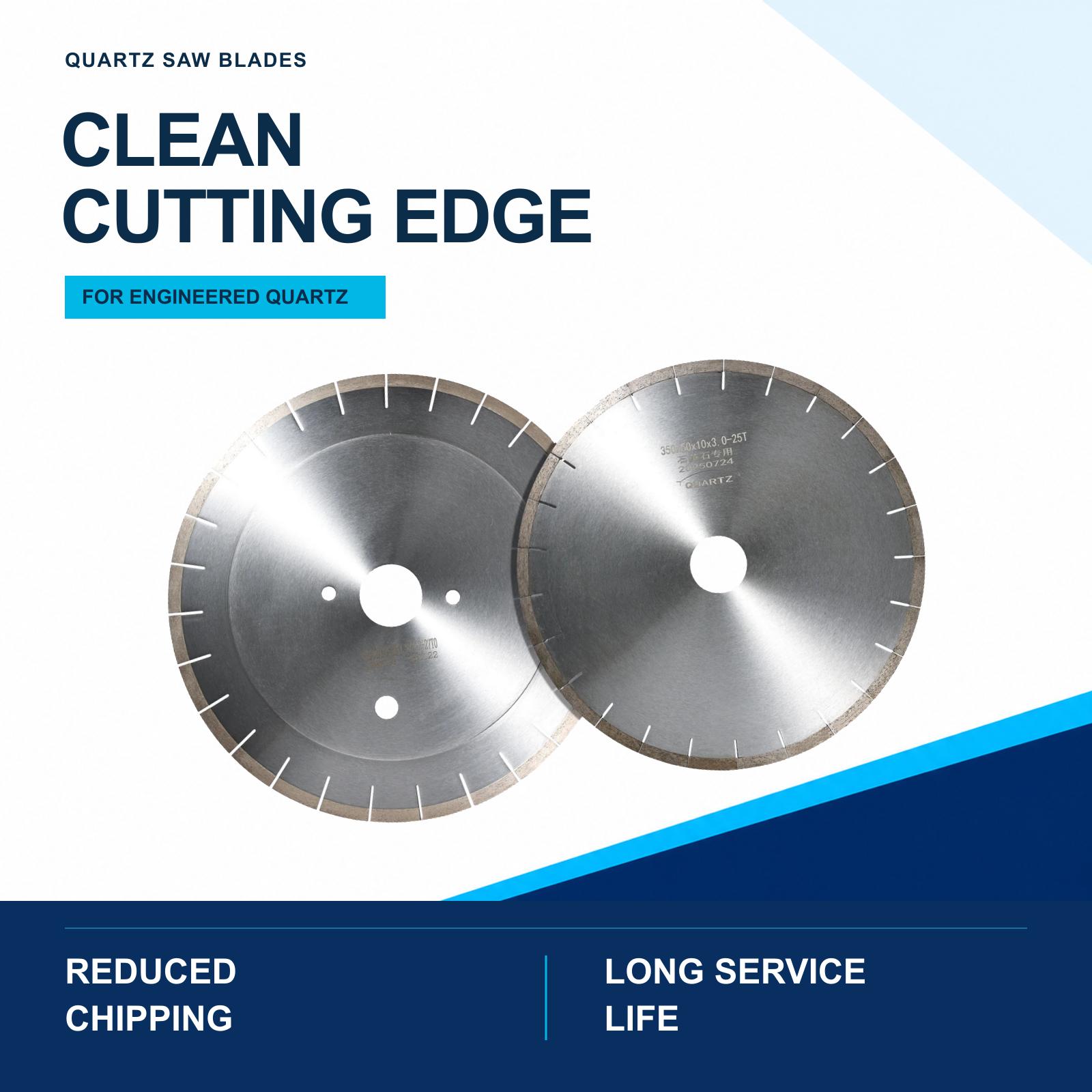
Quartz Saw Blades
Choose by the actual slab composition, not its colour or trade name. The quartz series addresses quartz stone and artificial boards; identify nano or microcrystalline material separately before comparing blades.
View specifications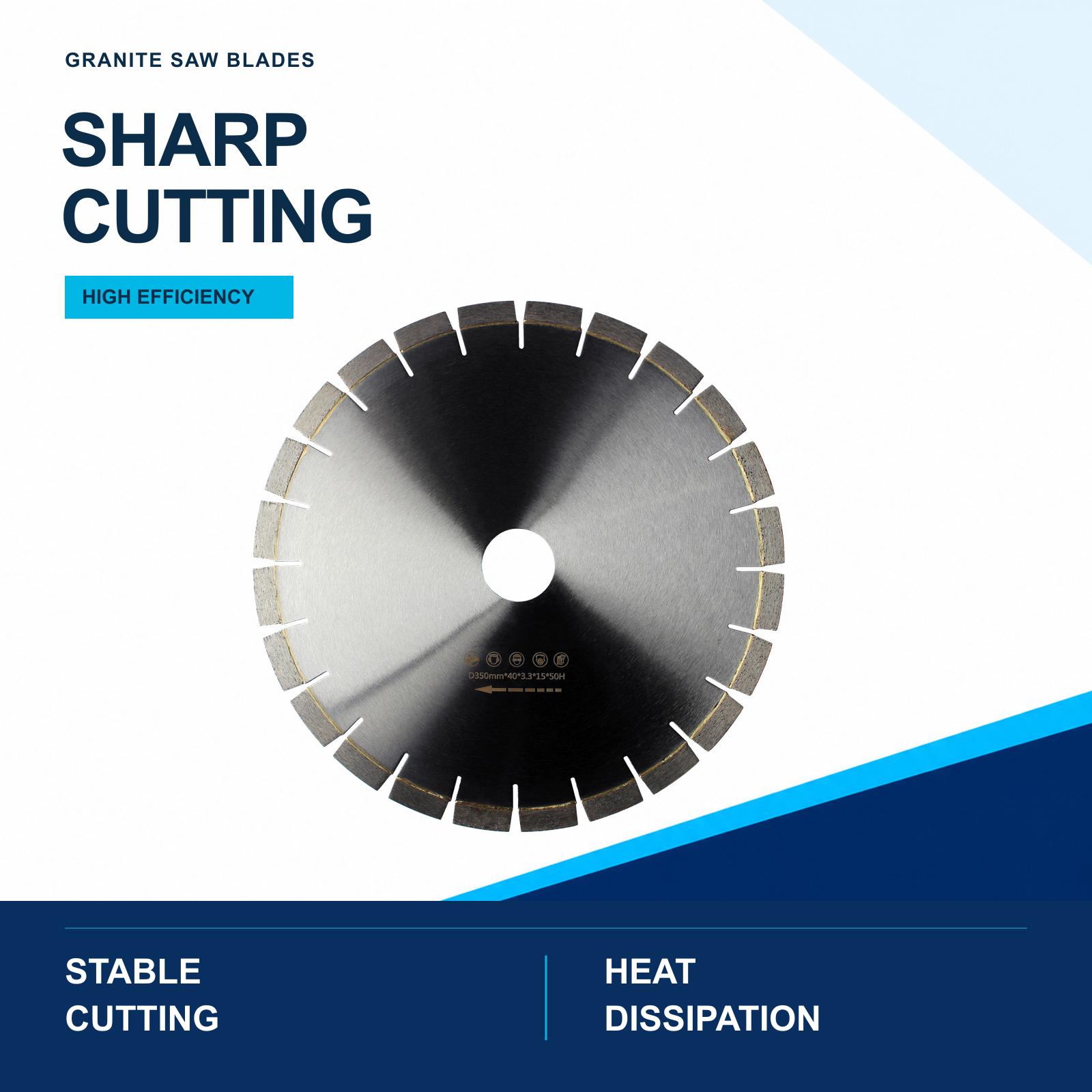
Granite Saw Blades
Use this series for medium-to-high hardness granite and quartzite cutting. Identify the stone and slab thickness, then compare the diameter and cutting-section combination permitted by your machine.
View specificationsSelection example: a 350 mm saw cutting two materials
Suppose a saw accepts a 350 mm blade and the factory processes engineered quartz and natural granite. Both product families include that diameter, so diameter alone does not settle the choice. Shortlist the quartz configuration for the quartz job and the granite configuration for the granite job; check the bore, segment dimensions and operating mode for each.
If one proposed blade is intended to cover both jobs, compare it on both materials. Record accepted edge quality, cut length, cutting time and rework separately. A successful quartz trial does not approve the granite job automatically.
Compare the cost of finished work
Judge price alongside accepted output and the work needed after cutting. A lower blade price may bring no saving if it adds edge repair, scrap or frequent changes. Use the same material batch and acceptance standard when comparing candidates.
For a focused quotation, send the slab name and thickness, straight or miter requirement, saw model, current blade marking and the result you want to improve. For mixed-material production, include which material accounts for most of the work.
FAQ
Can one bridge saw blade cut marble, quartz and granite?
Some products may be rated for more than one material, but physical fit does not prove suitable performance. Confirm the stated application and test each important material separately. A material-specific blade may be preferable when edge quality or production consistency matters.
What is the difference between quartz and quartzite for blade selection?
Engineered quartz is a manufactured slab containing mineral aggregate and binder; quartzite is natural stone. They can respond differently to cutting. Identify the exact material rather than using “quartz” as a universal description.
Should marble use a continuous or segmented blade?
Both formats are available in the marble range. Compare the actual slab, machine, approved cutting method and required edge before choosing a configuration.
How should blade life be compared?
Use the same material, cut length, machine, acceptance standard and end-of-life definition. A life claim without test conditions is not a reliable purchasing comparison.