
In this guide 8 sections
Make the enquiry specific enough to compare quotations
A useful diamond-tool RFQ describes the material, operation, machine, tool dimensions and required result. Add quantity, destination, desired delivery date and any branding needs. Ask suppliers to quote against those same fields so the comparison covers a complete configuration rather than a product name and unit price.
A useful enquiry connects the part to the job
01Application details
Material and thickness → required cut or edge → machine model → operating mode.
02Tool details
Product identity → diameter and bore → cutting-section dimensions → quantity and required delivery date.
Send the information that changes the specification
| Part of the enquiry | Include | Why the supplier needs it |
|---|---|---|
| Material and task | Exact material, thickness, cut or edge drawing | Identifies the application and required result |
| Machine | Model, nameplate, mounting and operating mode | Establishes physical and operating compatibility |
| Tool | Product type, diameter, bore, cutting-section dimensions | Defines the proposed item |
| Current problem | Photos, current tool marking and when the problem occurs | Gives the replacement discussion a baseline |
| Order | Quantity, destination, needed date and packing scope | Allows a specific commercial quotation |
| Acceptance | Required dimensions, edge condition and sample plan | Makes approval and inspection checkable |
Compare the options Tap to expand
Material and task
- Include
- Exact material, thickness, cut or edge drawing
- Why the supplier needs it
- Identifies the application and required result
Machine
- Include
- Model, nameplate, mounting and operating mode
- Why the supplier needs it
- Establishes physical and operating compatibility
Tool
- Include
- Product type, diameter, bore, cutting-section dimensions
- Why the supplier needs it
- Defines the proposed item
Current problem
- Include
- Photos, current tool marking and when the problem occurs
- Why the supplier needs it
- Gives the replacement discussion a baseline
Order
- Include
- Quantity, destination, needed date and packing scope
- Why the supplier needs it
- Allows a specific commercial quotation
Acceptance
- Include
- Required dimensions, edge condition and sample plan
- Why the supplier needs it
- Makes approval and inspection checkable
If a field is unknown, say which detail you need help identifying. A clear nameplate or mounting photograph is more useful than guessing a bore or speed value. Keep measurements labelled with units.
Enquiry example: preparing a replacement-blade request
Instead of “Please quote a 350 mm stone blade,” describe the actual job: slab product and thickness, straight or miter cut, saw model, mounting details and the required edge. Attach the current blade marking and photographs of the result that needs improvement.
Ask the supplier to return the proposed product reference, full dimensions, intended application and operating mode alongside the commercial offer. That gives both sides a specific item to discuss and later inspect.
Compare the technical offer before the price
A price comparison is useful when the quotations describe equivalent requirements. Check whether each offer includes the same dimensions, quantity, packaging and delivery basis. Ask separately about sample cost, minimum quantity and lead time for the selected configuration.
For an OEM order, identify whether the change is only branding or also dimensions, bond or construction. Those are different scopes and can affect sample preparation and approval. The OEM project guide explains how to keep them separate.
Agree what the sample must demonstrate
Define the material and machine for the trial, the intended operation and the acceptable edge or profile. Record the settings and compare like-for-like work. Use a drawing, agreed sample or clear inspection criterion as the reference.
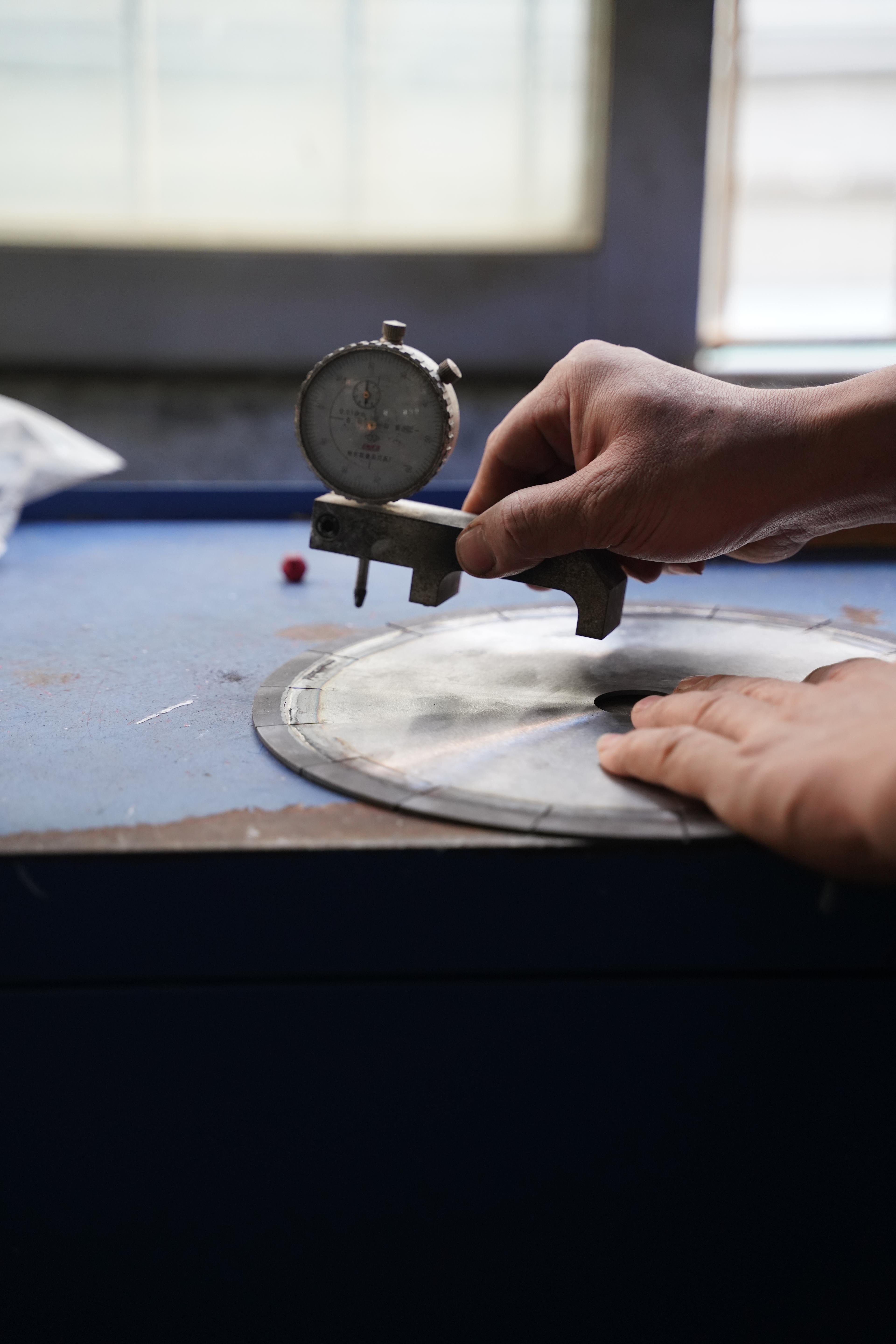
For a dimensional check, ask which instrument and measurement points will be used. For an application comparison, keep material identity, thickness, tool identity and output together. A blade beside a machine does not tell you what material was cut or what result was accepted.
Connect the delivered item to the approved specification
01Identity and dimensions
Check the product reference and agreed dimensions using suitable measuring equipment.
02Condition and records
Compare quantity, marking, visible condition and packing with the order reference.
Connect inspection to the purchase order
Before shipment, compare the agreed product identity, quantity, dimensions, markings and packing with the approved reference. If application testing is included in the order, retain the relevant method and result separately from dimensional inspection.
At receiving, inspect packaging and visible condition before installation. Photograph any concern and identify the affected items. Follow the tool and machine instructions for mounting and initial use; the machine matching guide covers the required compatibility fields.
Keep one reference for repeat orders
Store the approved quotation, specification, sample decision and packing details under one order or product reference. Record revisions. When the material, machine or product specification changes, review the affected approval rather than assuming the old result applies.
For the first enquiry, send the application details and photographs you already have, together with quantity and destination. State which technical fields still need identifying so the supplier can help complete the requirement.
FAQ
What are the three most important details in a diamond blade RFQ?
Start with the exact material, machine model and required operation or edge. Then add diameter, bore, cooling and current result. These details turn a price request into a technical selection discussion.
Should I request a sample before a volume order?
Ask about sample availability, quantity and cost in the quotation. Agree what you will test and how you will accept the result before ordering the sample.
What should a pre-shipment inspection include?
At minimum, consider identity, quantity, visible condition, agreed critical dimensions, markings, documents and packing. The exact scope should be defined in the purchase specification.
Is a factory test photo enough evidence?
Ask for the photograph together with the item reference, inspection date, method and result. Those details let you check it against the order and follow up on any discrepancy.