
In this guide 7 sections
Bond hardness is about how the matrix wears
A diamond blade’s bond holds the diamond particles and wears to expose fresh cutting points. Hard, relatively non-abrasive material often calls for a more readily wearing bond; abrasive material may need greater wear resistance. Use that relationship to discuss a starting specification, then confirm it with the actual material, machine and cutting result.
The bond wears so fresh diamond can work
01Exposed points
Diamond points contact the material while the surrounding bond supports them.
02Working surface wears
Diamond points wear or fracture as the cutting section meets the workpiece.
03New points emerge
Controlled bond wear exposes another layer of diamond. The renewal rate must suit the job.
Hardness and abrasiveness describe different things
A material can resist cutting without wearing the bond quickly. Another material can remove bond rapidly even if it feels comparatively easy to cut. This distinction explains why simply ordering the “hardest” blade can produce the wrong result.
Norton’s explanation of diamond blades describes controlled matrix wear and the exposure of fresh diamond. The useful question for a supplier is how the proposed bond renews the cutting surface on your material.
| Observation | What it may suggest | Check before changing the bond |
|---|---|---|
| Smooth working surface and slow cutting | The cutting surface is not renewing effectively | Material match, cooling, power and approved operating settings |
| Rapid loss of segment material | Wear resistance may be insufficient for the job | Material abrasiveness, cooling, feed and uneven wear |
| One-sided or irregular wear | Mechanical or process instability may be involved | Mounting, alignment, support and water distribution |
| Good results on one slab, poor results on another | The same specification may not suit both materials | Exact slab identity and thickness; compare separately |
Compare the options Tap to expand
Smooth working surface and slow cutting
- What it may suggest
- The cutting surface is not renewing effectively
- Check before changing the bond
- Material match, cooling, power and approved operating settings
Rapid loss of segment material
- What it may suggest
- Wear resistance may be insufficient for the job
- Check before changing the bond
- Material abrasiveness, cooling, feed and uneven wear
One-sided or irregular wear
- What it may suggest
- Mechanical or process instability may be involved
- Check before changing the bond
- Mounting, alignment, support and water distribution
Good results on one slab, poor results on another
- What it may suggest
- The same specification may not suit both materials
- Check before changing the bond
- Exact slab identity and thickness; compare separately
Read the whole cutting system
Bond, diamond characteristics and segment geometry work together. Diameter and bore can match the saw while the cutting section still fails to suit the job. Give the supplier the material name, thickness, machine, operation and actual wear pattern.
For a blade that repeatedly becomes smooth and slow, review the current specification after checking the setup. For a blade that loses segment height quickly, measure at consistent points and compare accepted cut length. A single photograph cannot establish either a wear rate or the correct replacement formula.
Choose by the wear behaviour you observe
- 01
Identify the material
Record its exact type, thickness and abrasive characteristics; a trade name alone may hide differences.
- 02
Describe the symptom
Slow cutting with a smooth surface and rapid segment loss are different problems.
- 03
Check the process
Review mounting, power, cooling and approved settings before changing the bond.
- 04
Compare a suitable alternative
Use the same material and acceptance criteria, and record the result.
Start with the appropriate material family
The ceramic, quartz and granite ranges are useful starting points for different applications. Their photographs and dimensions identify product families; ask about the bond for the precise material and operation when requesting a quotation.
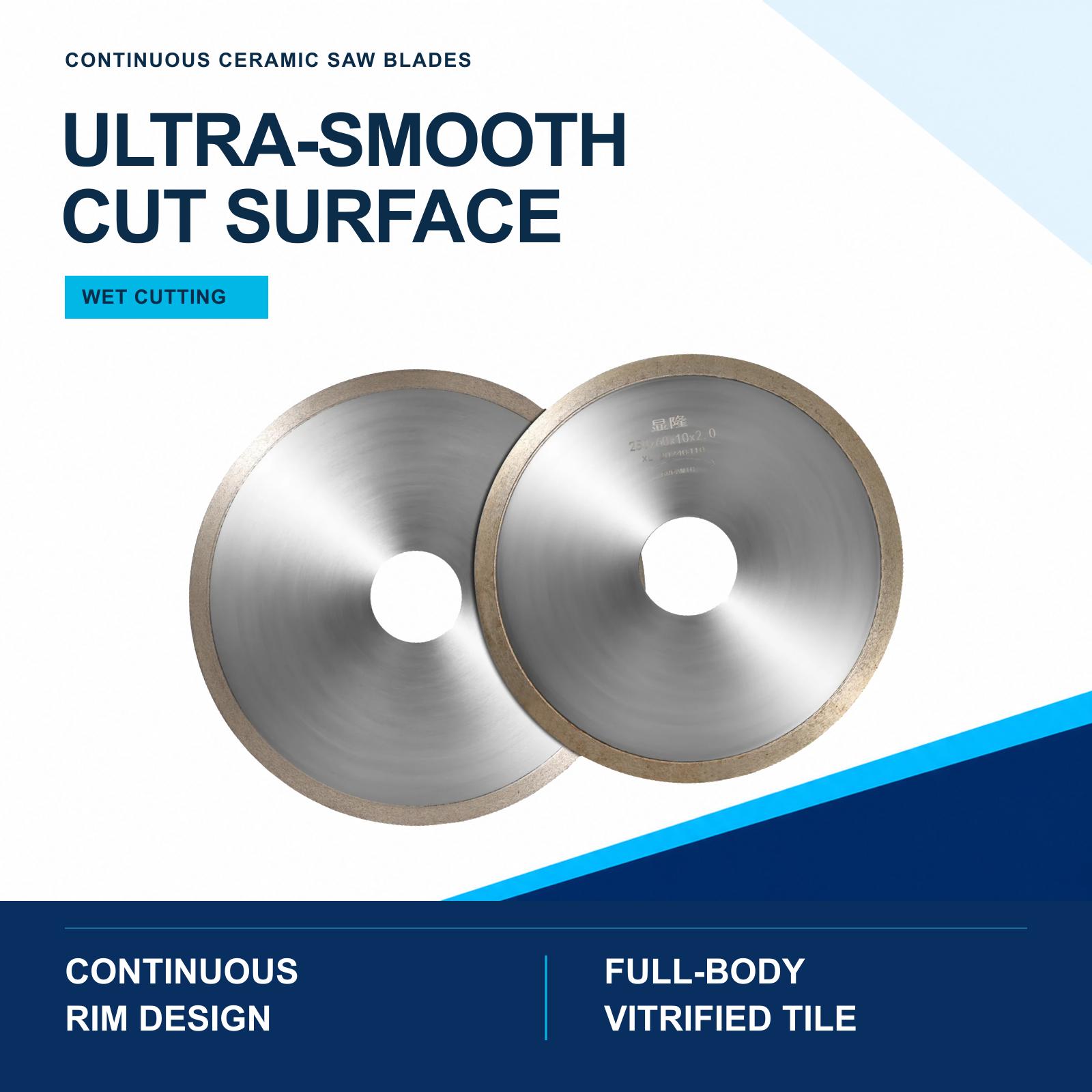
Continuous Ceramic Saw Blades
Consider this continuous-rim series for wet cutting vitrified glazed, interior wall and glazed wall tiles. Confirm the tile body, visible-edge requirement and machine fit before selecting the diameter.
View specifications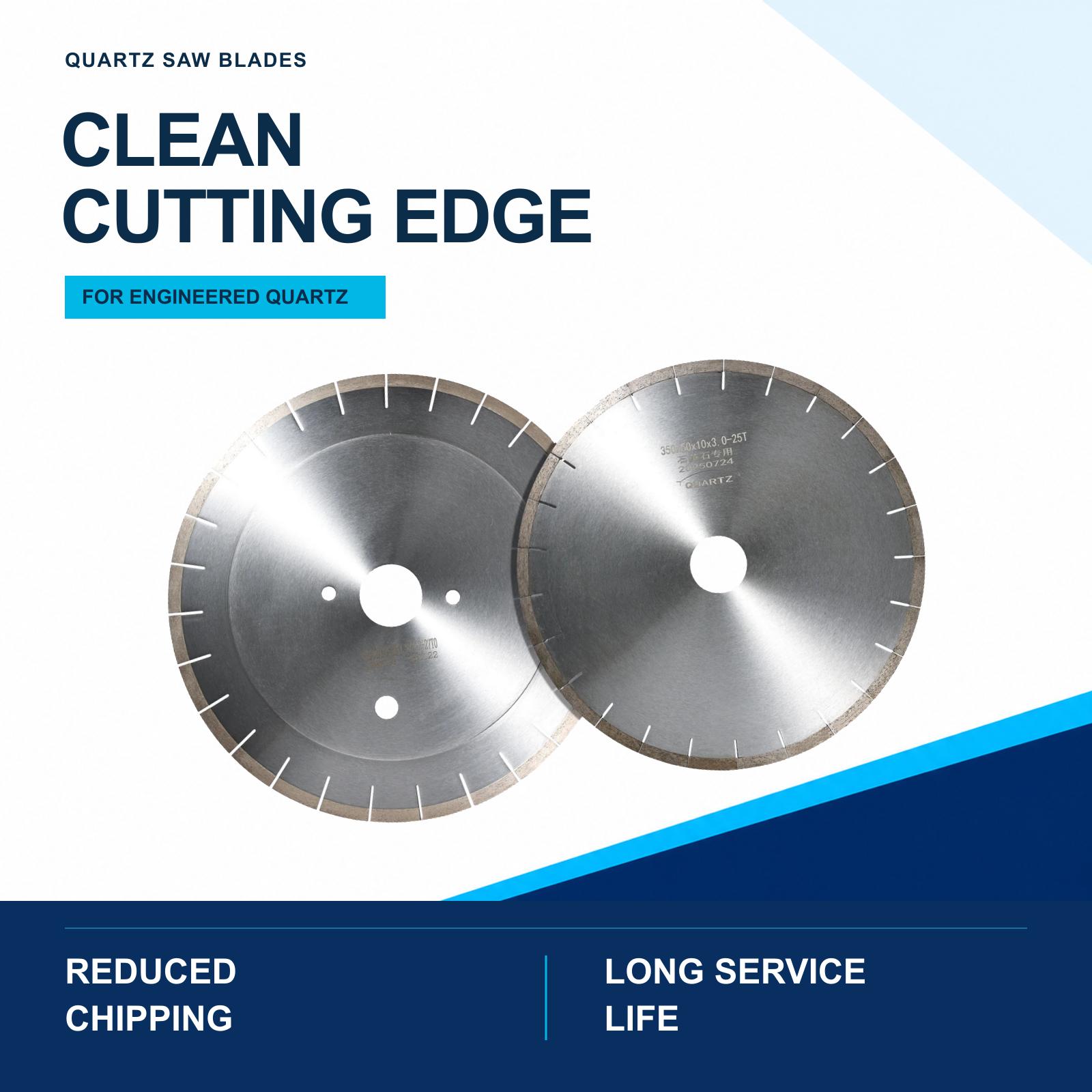
Quartz Saw Blades
Choose by the actual slab composition, not its colour or trade name. The quartz series addresses quartz stone and artificial boards; identify nano or microcrystalline material separately before comparing blades.
View specifications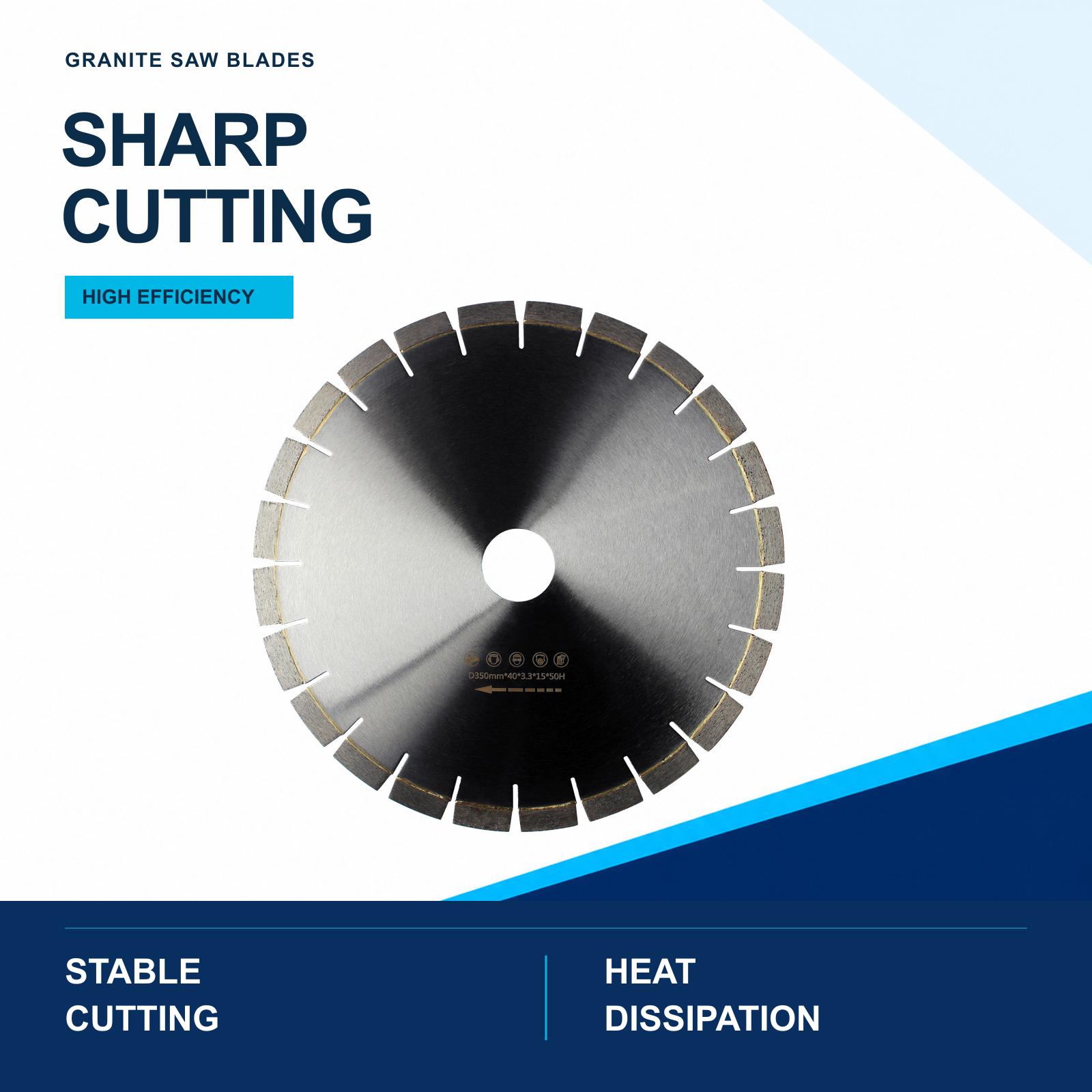
Granite Saw Blades
Use this series for medium-to-high hardness granite and quartzite cutting. Identify the stone and slab thickness, then compare the diameter and cutting-section combination permitted by your machine.
View specificationsFor mixed-material production, list the main materials by volume and name any difficult exceptions. A blade approved for one stone should not become the default for another solely because it fits the same machine.
Selection example: a blade that slows on a new slab
Suppose the saw and blade are unchanged, but cutting becomes slower after a new porcelain batch arrives. First compare the slab identity, body, thickness and surface. Check cooling, mounting and the approved operating settings. If those checks do not explain the change, send the supplier photographs and samples from both batches to discuss a different formulation.
Compare any proposed alternative on the new material under an agreed procedure. Record edge quality, accepted cut length, cutting time and wear. That shows whether the change addresses the problem without trading it for unacceptable wear or edge damage.
Ask for a complete configuration
The enquiry should connect the desired result to a material and process: “This slab, this thickness, this machine, this edge requirement, and this current wear pattern.” Include the blade dimensions and marking. The supplier can then review bond direction alongside geometry and operating mode.
For the inspection sequence when a blade will not cut, see the glazing and slow-cutting guide.
FAQ
Is a soft-bond diamond blade physically soft?
No. Soft bond describes how readily the segment matrix wears. It does not mean the steel core or complete blade is mechanically soft.
Why does a hard material often need a softer bond?
A hard, dense material may not erode the bond quickly enough. A more readily wearing bond can help release worn diamond particles and expose new cutting points.
Does higher diamond concentration always mean better cutting?
No. Diamond concentration, particle characteristics, bond, geometry, machine power and operating conditions work as a system. Adding more diamond does not automatically improve the result.
Should buyers request the softest bond for porcelain?
No. The formulation must also provide suitable life, stability and edge quality on the actual machine. Softer is a direction for evaluation, not a complete purchase specification.