
Dry-processing equipment needs to be identified before the wheel discussion begins.
APPLICATION SOLUTION · DRY GRINDING
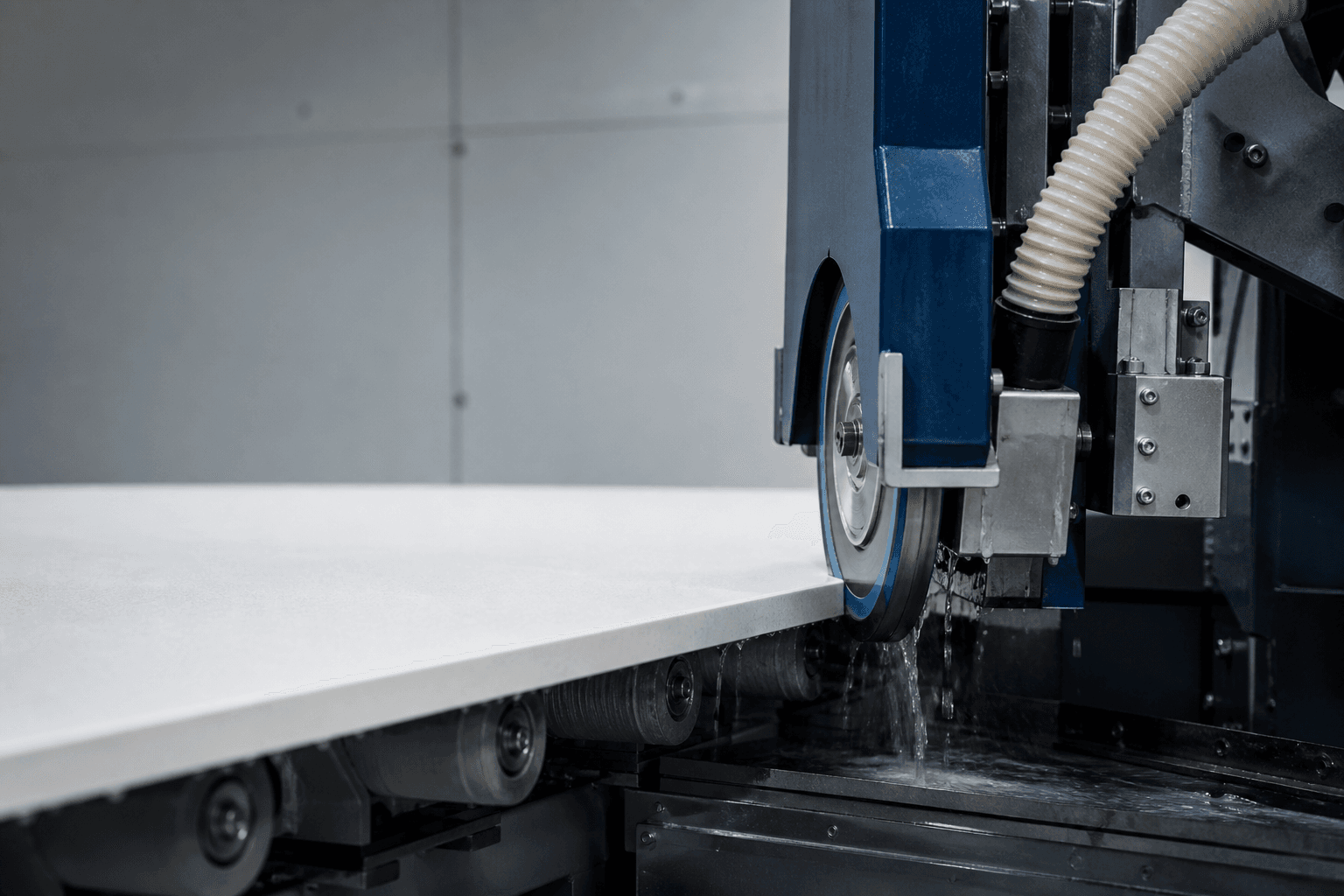
Dry Edge Grinding for Ceramic & Sintered Stone
Choose dry edge-grinding wheels by the work of each station. Separate material removal from fine finishing, then match the bond, grit, working section and mounting interface to the ceramic or sintered panel.
Material scope
Ceramic tileSintered stone panels
Processing focus
Dry edge grindingEdge processingFine grindingEdge trimming
Equipment context
Table-type dry edge grinding machineSemi-automatic dry edge grinding machineAutomatic dry edge grinding machine
BUYER CONTEXT
Separate removal
from final finishing.
For a dry edge process, identify the panel material, the stage to be completed and the machine in use. This prevents initial removal and final edge refinement from being treated as the same requirement.
Initial edge preparation and a finer edge stage are different procurement questions.
Ceramic and sintered-stone jobs should be described with the actual panel material.
PROCESSING ROUTE
Build the selection
around the actual job.
- 01
Define the dry route
Confirm the dry edge-grinding environment and panel material.
- 02
Separate the edge stages
Distinguish initial edge work from the required fine-grinding or trimming stage.
- 03
Review the wheel series
Compare dry and wet applications on the metal-bond and resin-bond squaring wheel pages.
RECOMMENDED TOOL ROUTE
Tool stages for
this processing job.
Start from the stage you need to complete. The linked product series lets you review the available configurations once the material and machine are confirmed.
What to compare before choosing
| Product series | Selection considerations |
|---|---|
| Continuous Metal-Bond Squaring Wheels | Consider this metal-bond series for dry or wet ceramic and sintered-stone edge grinding. Compare the stock-removal task with the later finishing requirement before choosing the working section and grit. |
| Resin-Bond Squaring Wheels | Choose the resin-bond configuration for the fine-grinding or trimming stage and its dry or wet method. Include the preceding wheel, incoming edge condition and required finish when comparing grit options. |
Continuous Metal-Bond Squaring Wheels
Consider this metal-bond series for dry or wet ceramic and sintered-stone edge grinding. Compare the stock-removal task with the later finishing requirement before choosing the working section and grit.
View specificationsResin-Bond Squaring Wheels
Choose the resin-bond configuration for the fine-grinding or trimming stage and its dry or wet method. Include the preceding wheel, incoming edge condition and required finish when comparing grit options.
View specifications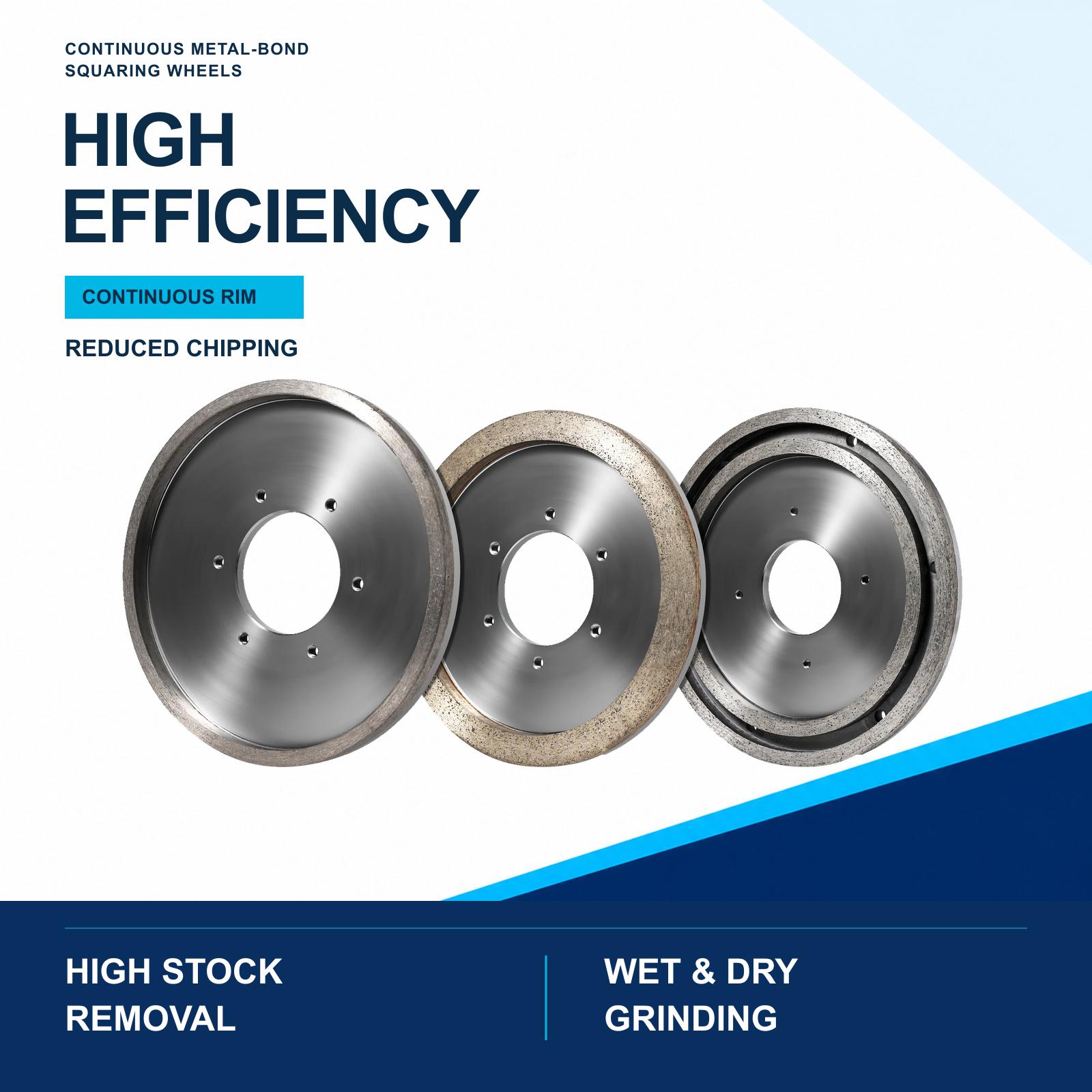
Dry edge-processing route
Continuous Metal-Bond Squaring Wheels
Continuous metal-bond squaring wheels for dry and wet grinding of ceramic tile and sintered stone panels.
View product series ↗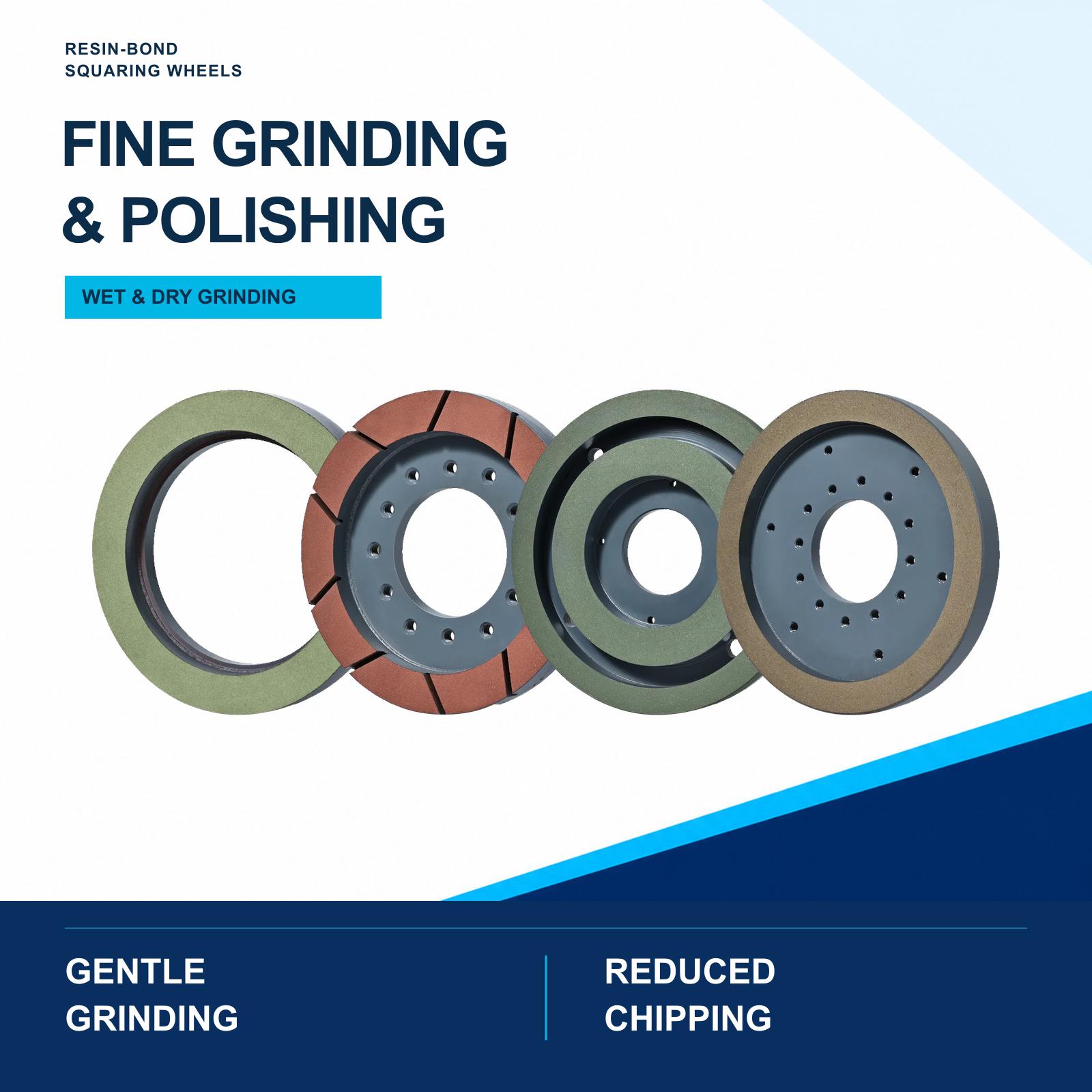
Fine grinding and trimming route
Resin-Bond Squaring Wheels
Resin-bond squaring wheels for fine grinding and edge trimming, with dry and wet configurations.
View product series ↗SELECTION LOGIC
Confirm the project
before the quote.
Panel material
Confirm ceramic tile or sintered stone panel before defining the grinding route.
Process stage
State whether the wheel is being considered for edge preparation, fine grinding or edge trimming.
Dry-grinding machine
Provide the table-type, semi-automatic or automatic dry edge grinder information.
Final edge requirement
Describe the edge-processing result needed so the process stages can be discussed in sequence.
CUSTOM & OEM PROJECTS
Custom & OEM
support.
Custom and OEM requests can be reviewed around your material, processing operation, machine and project-specific requirements.
01Ceramic or sintered stone material
02Dry edge-grinding machine
03Required edge stage
04Desired downstream edge process
APPLICATION FAQ
Buyer FAQs,
answered.
- 01Why should dry edge grinding be separated into process stages?
- Initial edge removal and final grinding or trimming are different jobs. Stating the stage helps frame a more useful wheel discussion.
- 02What machine information is useful for dry edge grinding?
- Provide the dry edge grinder type, the panel material and the required edge stage. These details keep the selection connected to the process in use.