
In this guide 8 sections
Effective diamond blade cooling depends on water reaching the working area continuously, with the coverage and flow specified for the saw and blade. Before replacing a wet-cutting blade because of rough edges or slow cutting, check the delivery point, supply consistency, water condition and machine setup. A full tank and a wet table are only part of that inspection.
For tile and stone fabricators, this matters commercially. A replacement blade trial is difficult to interpret when the water system changes between cuts. For distributors, a clear description of the customer's cutting setup makes a product recommendation more useful than a request for a “better blade.”
This guide explains how to document wet-cutting conditions, separate a water-delivery problem from other causes and prepare a technically useful enquiry for your next blade order.
What does water do during diamond blade cutting?
Water helps cool the blade and clear cutting residue from the working area. RUBI's explanation of its blade cooling and cleaning system describes both functions and shows why the delivery position matters.
The photograph below shows a flexible water line beside the blade guard, water across the workpiece and runoff below the table. These are three useful observation points: where water arrives, where cutting happens and where the water leaves.
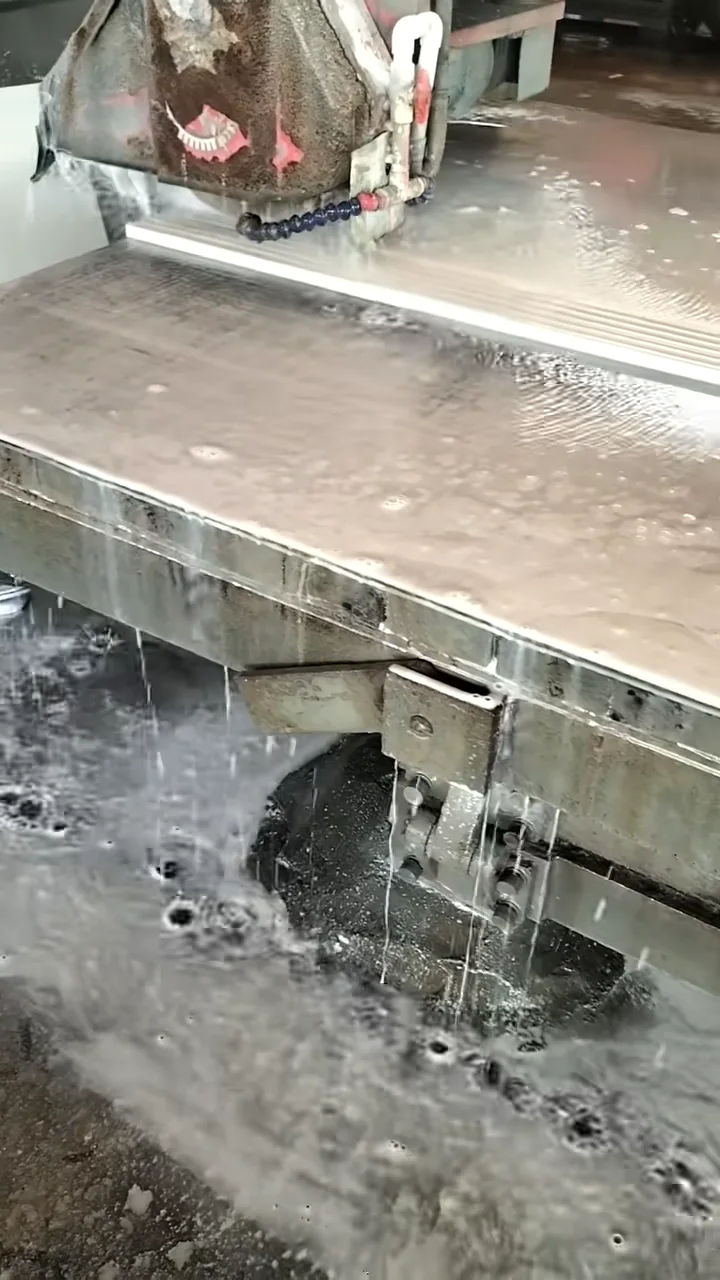
For a purchasing discussion, describe these points separately. “The pump is running” describes the supply equipment. “Water reaches the cutting area throughout the pass” describes delivery during the operation. A useful blade trial records the latter along with the machine and material.
Water also contributes to dust control. OSHA's stationary masonry saw guidance describes continuous water delivery and notes that enclosed work areas may need additional ventilation. Apply the exposure controls required for your material, task and location; a visibly wet cut alone does not establish adequate exposure control.
Five checks to make before a replacement-blade trial
1. Confirm the approved blade and machine combination
Read the blade identification and machine instructions before making adjustments. Confirm the material application, diameter, bore, rotation direction, maximum permitted speed and wet-use requirements. Installation preparation should also include the specified flange arrangement and a condition check of the blade.
Norton's wet tile saw manual calls for continuous water on both sides of the blade and prohibits dry cutting with blades marked for wet use. Use the instructions for your actual equipment to establish the required delivery arrangement.
Keep guards fitted during operation. Stop the equipment, wait for moving parts to stop and isolate the power before hands-on inspection or maintenance. If a blade is damaged, remove it from service rather than using it for a comparison cut.
2. Check the delivery point at the cutting head
Examine the intended water path with the machine safely stopped. Look for displaced outlets, obstructed passages or hoses that no longer hold their position. Check clearance from the workpiece and moving components against the machine instructions.
RUBI's DC-250 PYTHON manual provides a useful equipment-specific example: its adjustable cooling nozzle is positioned according to tile thickness. The general purchasing lesson is to document nozzle position along with the material dimensions. A setting from a different machine is not a transferable specification.
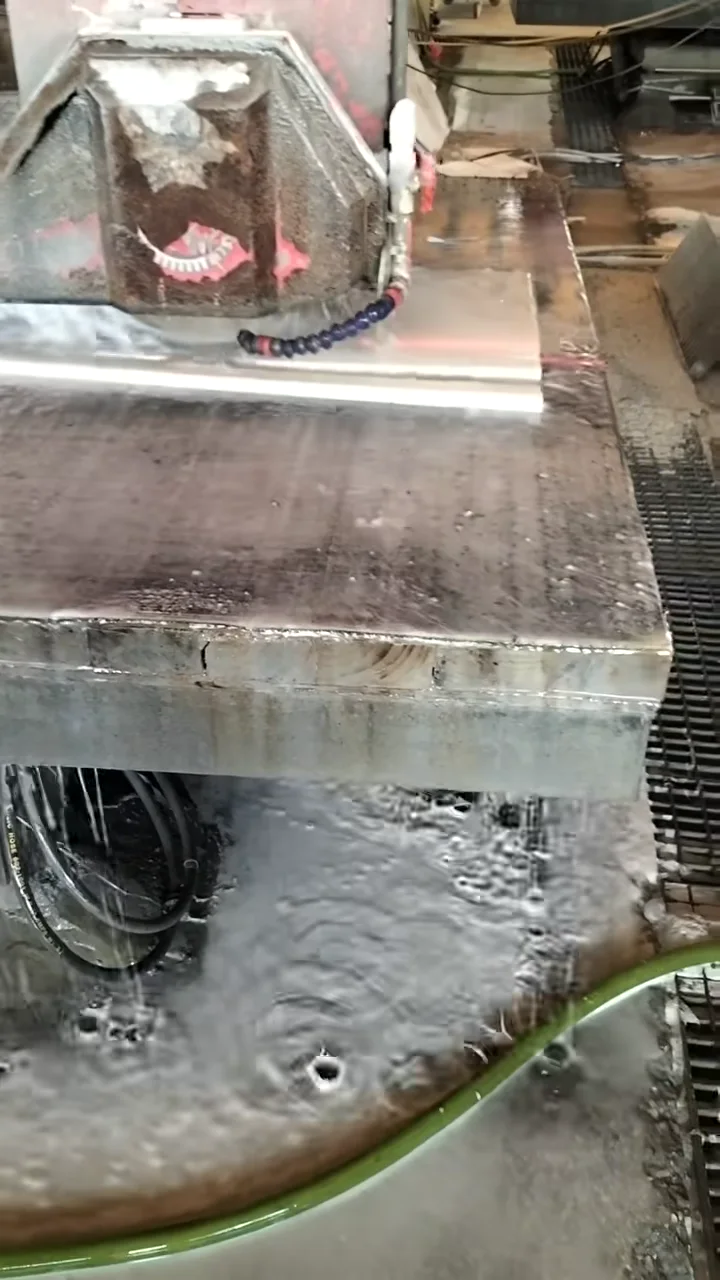
For supplier review, take a clear photograph of the normal operating arrangement from a safe position. Include enough of the head and workpiece to show their relationship. A close-up of a hose end without the cutting area gives less context.
3. Observe delivery across the full permitted travel
A moving cutting head changes position during the pass. Under the machine's normal guarded operating procedure, observe whether water delivery remains consistent at the start, middle and end. Keep hands clear; make adjustments only after stopping and isolating the equipment.
Record where a change occurs. Does the stream weaken at one end of travel? Does a supply hose become tight? Does the issue appear only at a particular head height or angle? These observations give maintenance personnel a specific condition to investigate.
A short video can help communicate an intermittent issue. Keep the frame wide enough to show the head position and water delivery together. Add the machine model and operation to the message so the supplier can interpret what is visible.
4. Inspect the supply, tank and return arrangement
Follow the water circuit during the maintenance inspection. Check the specified tank level, pump inlet, filters, hoses and outlets. Identify sediment accumulation and follow the equipment maker's cleaning and water-replacement procedure.
RUBI's wet saw maintenance guidance links blocked pumps and nozzles with reduced cooling and poor slurry clearance. It also stresses cleaning the tray and water circuit. A recurring restriction needs attention before a new blade is evaluated.
Record when the system was last serviced and what was found. “Filter cleaned before trial” is more useful than “water checked.” If performance changes during a shift, include the time or production stage when the change becomes noticeable.
5. Record flow information in a usable form
Ask for the required flow and any pressure conditions for the actual saw, blade and operation. Flow describes the volume delivered over time; pressure describes a different property of the system. A pump label or pressure reading alone does not describe delivery at each outlet.
Where measurement is required, use the manufacturer's approved method or have a qualified technician take it. Record the value, unit, measurement location and operating condition. If several outlets share the supply, clarify whether the requirement applies to the total circuit or to individual outlets.
There is no useful universal litres-per-minute figure for every tile saw, bridge saw, blade diameter and cutting depth. When requirements are unclear, resolve them with the machine and blade suppliers before the trial. Avoid introducing an arbitrary setting simply to complete a test sheet.
What can the cutting symptoms tell you?
Symptoms help organize an investigation, but a single symptom rarely identifies one cause. Norton's diamond blade troubleshooting guide associates inadequate coolant at the cutting surface with burning and lists uneven water distribution among the causes of uneven side wear.
Use the following table to decide what evidence to collect before discussing a different blade.
| Observation | Useful water-system evidence | Additional information for the review |
|---|---|---|
| The pump runs but delivery looks weak | Outlet condition, tank level and service history | Machine model and approved supply requirement |
| Delivery changes during head travel | Video showing the position where it changes | Hose routing and cutting-head position |
| One cut edge differs from the other | Coverage on each side of the working area | Blade condition, alignment and workpiece support |
| Cutting resistance changes during a shift | Water condition and delivery when the change appears | Material batch, feed setting and blade identification |
| Heat damage or abnormal discoloration is suspected | Water-system condition before the event | Stopped-machine inspection and supplier assessment |
| A new blade gives an inconsistent result | Recorded water setup for each trial | Full specification and acceptance method for each blade |
Compare the options Tap to expand
The pump runs but delivery looks weak
- Useful water-system evidence
- Outlet condition, tank level and service history
- Additional information for the review
- Machine model and approved supply requirement
Delivery changes during head travel
- Useful water-system evidence
- Video showing the position where it changes
- Additional information for the review
- Hose routing and cutting-head position
One cut edge differs from the other
- Useful water-system evidence
- Coverage on each side of the working area
- Additional information for the review
- Blade condition, alignment and workpiece support
Cutting resistance changes during a shift
- Useful water-system evidence
- Water condition and delivery when the change appears
- Additional information for the review
- Material batch, feed setting and blade identification
Heat damage or abnormal discoloration is suspected
- Useful water-system evidence
- Water-system condition before the event
- Additional information for the review
- Stopped-machine inspection and supplier assessment
A new blade gives an inconsistent result
- Useful water-system evidence
- Recorded water setup for each trial
- Additional information for the review
- Full specification and acceptance method for each blade
Stop cutting if the required water supply fails or the blade shows damage. Have the cause and blade condition assessed before restarting. For a broader investigation of slow cutting, see our diamond blade glazing and troubleshooting guide.
How to make a blade comparison useful for purchasing
Define the material and accepted result first
Factory testing should begin with a written description of the job. Identify the tile or slab product, thickness, surface finish and cut type. State whether the edge will remain visible, receive further grinding or form part of an assembled joint.
Agree how the result will be inspected. For example, identify which face and edge matter, how photographs will be taken and which dimensional checks are required. Set any numerical acceptance limits with the customer before testing; a sample should be judged against the intended product application.
For repeat purchasing, keep the accepted sample or an adequately documented reference. A clear reference helps prevent “smooth edge” from meaning one thing to the buyer and another to the person inspecting the next order.
Keep a record of the conditions behind each result
Use the same material batch where practical and document the machine setup. If two blades require different approved operating conditions, record those differences instead of forcing both into one setting.
| Trial record | What to enter |
|---|---|
| Material | Product or series, batch reference, thickness and surface |
| Tool | Supplier, product code, diameter, bore and working-section dimensions |
| Machine | Model, operating speed and relevant mounting arrangement |
| Operation | Straight cut or miter, cut length, depth and feed setting |
| Water | Supply arrangement, outlet position, condition and available measurements |
| Result | Edge photographs, dimensional observations, accepted or rejected output |
| Follow-up | What changed, who reviewed it and which condition needs confirmation |
Compare the options Tap to expand
Material
- What to enter
- Product or series, batch reference, thickness and surface
Tool
- What to enter
- Supplier, product code, diameter, bore and working-section dimensions
Machine
- What to enter
- Model, operating speed and relevant mounting arrangement
Operation
- What to enter
- Straight cut or miter, cut length, depth and feed setting
Water
- What to enter
- Supply arrangement, outlet position, condition and available measurements
Result
- What to enter
- Edge photographs, dimensional observations, accepted or rejected output
Follow-up
- What to enter
- What changed, who reviewed it and which condition needs confirmation
The value lies in connecting each result to its conditions. A photograph without a blade reference is difficult to compare later. A blade reference without the water setup leaves an important part of the process undocumented.
Compare usable output and the work needed to obtain it
Record rejected pieces, additional edge finishing and interruptions as well as the cutting time. A faster pass may offer little advantage if it creates more rework for the customer's finished product.
A practical comparison can express cost per accepted unit as the recorded tool consumption, processing time, rework and rejected material divided by accepted output. Use the same accounting boundaries for each candidate and label assumptions clearly in the purchasing worksheet.
Keep short sample evaluation separate from a tool-life claim. A few satisfactory cuts can help assess initial fit and edge quality; estimating service life requires a suitable longer record of use and wear. Ask for evidence that matches the particular claim being compared.
When should you review the blade specification?
Review blade selection after the water arrangement and machine condition have been checked, or whenever the existing blade is unsuitable or damaged. Provide the supplier with the material and required cut rather than selecting solely from blade appearance.
For ceramic tile applications, the continuous ceramic saw blade range is one starting point for a specification discussion. For sintered stone, review the sintered stone saw blade range against the slab and machine requirements. Confirm the exact configuration and operating instructions for the quoted item.
A blade enquiry should distinguish outside diameter, bore, segment height and segment thickness. Include the machine's permitted blade size and speed, mounting details and the type of cut. If you are still deciding the process itself, start with our wet versus dry cutting guide.
Before shipment inspection, agree which details will be verified against the order: item identification, dimensions, quantity, markings, visible condition and packaging. Also agree whether an application test is part of the purchase. An inspection checklist and an application trial answer different purchasing questions, so define both scopes clearly.
What should you send with a wet-cutting blade enquiry?
A compact technical brief can reduce repeated clarification. Send the following information together:
- Material and job: tile or stone product, thickness, surface finish, cut type and required edge.
- Machine and mounting: model, permitted blade size, operating speed, bore and flange details available.
- Current tool: product code, dimensions, photographs and the change you want to achieve.
- Water arrangement: supply type, outlet photographs, relevant measurements and recent maintenance findings.
- Commercial requirements: sample or order quantity, destination and any labeling or packaging needs.
Identify unknown details explicitly in the enquiry. A machine nameplate, current blade marking and a clear photograph can help establish the next question without estimating a critical dimension. Keep the same brief with the sample feedback and final order so customer requirements remain traceable throughout the discussion.
Frequently asked questions
How much water does a wet-cutting diamond blade need?
Use the requirement for the specific blade, machine and operation. Confirm the units and where flow should be measured. A general value from another saw is not a reliable setting for your equipment. Water must reach the intended working area continuously during the approved cutting operation.
Can a blade overheat even when the table is wet?
Yes. Water on the table does not establish adequate delivery at the blade's working area. Review outlet direction and supply consistency, then investigate the blade application and machine condition. Suspected heat damage requires a stopped-machine inspection before further use.
Does more water always give a better cut?
Increasing flow cannot correct every cutting problem. Establish the specified delivery and coverage, then assess material compatibility, blade condition, mounting, support and operating settings. A controlled comparison is more useful than changing several settings at once.
Can I continue a short cut if the water stops?
Stop a wet-only cutting operation when its required water supply fails. Restore the system and check the blade before restarting under the manufacturer's procedure. The short length of the remaining cut does not change a wet-only blade rating.
Can a short video prove that a blade has a long service life?
No. A video can show the operating arrangement and a cutting pass. Service-life assessment requires information about the material, operating conditions, accumulated use and wear. Ask for records appropriate to the purchasing decision rather than treating visible water or one completed cut as a durability measurement.
What is the most useful first step before ordering a replacement?
Document the current application: material, machine, blade identification, water setup and the observed problem. Correct any maintenance issue that prevents a valid trial, then discuss a suitable blade specification and acceptance criteria with the supplier.
Conclusion: make water delivery part of the blade specification discussion
Reliable wet cutting starts with a compatible blade and machine, a maintained water system and a clearly defined result. Check where water arrives, whether delivery remains consistent through the pass and how the supply is maintained. Record those conditions when comparing blades.
For overseas purchasing, this produces a more useful enquiry and a clearer basis for sample approval. The aim is to connect the proposed blade to the customer's actual operation and an agreed inspection method.